Last updated November 17, 2026








Free written scope consultation - allowances, timeline, and change-order rules on paper before a single trade is scheduled
General Contractor Warning Signs Every Homeowner Should Know
Here’s the pattern we see most often: the homeowner who got burned didn’t ignore red flags. They saw them, and talked themselves out of them. The contractor was friendly. The bid was the lowest. The deposit request seemed aggressive but normal. The real warning signs that predict a project failure are quieter and more structural than a missed phone call: they’re in how the bid document is organized, how the payment schedule is worded, and whether a permit application was filed before demolition was scheduled. This guide walks through what to look for before you sign, written from what we’ve seen on projects across Mission Viejo after other contractors walked off the job.
Quick Answer
The most reliable contractor warning signs aren’t rude behavior or a slow callback. They’re structural: a deposit over 10% of the contract price (or $1,000, whichever is less), a bid that’s a single-page estimate with vague line items, a payment schedule not tied to completed milestones, a contractor who schedules demolition before pulling the permit, and a GC who can’t name their licensed subcontractors before contract signing. Each of these is visible before a single tool comes out, and each one is a documented predictor of disputes, mid-project repricing, or abandoned work.
Styles & brands we work with
- Kitchen remodeling
- Bathroom remodeling
- Home additions & ADU
- Roofing
- Windows & doors
- Driveway & pavers
- Fence
Table of Contents
- The California Deposit Cap: What the Law Requires and What It Reveals
- Anatomy of a Bid: What a Real Scope of Work Contains
- Permit Pull Timing: The Test Almost No Homeowner Runs
- Subcontractor Transparency: Who’s Actually Swinging the Hammer
- The Four-Minute CSLB Check That Reveals Everything
- Payment Schedules: What Tied-to-Milestone Looks Like
- Change Order Language: The Clause That Reprices Your Job
- Local Factors: Why Mission Viejo Homes See Specific Contractor Problems
The California Deposit Cap: What the Law Requires and What It Reveals
Under California Business & Professions Code Section 7159, a home improvement contractor cannot collect more than 10% of the contract price as a down payment, or $1,000, whichever is less. That’s state law. A contractor who asks for 30%, 40%, or 50% upfront is either unaware of the statute governing their own trade or knowingly violating it. Neither is a good sign for the money you’re about to hand over.
The number most homeowners who’ve been burned report handing over on day one is 30 – 50%. In our experience in Mission Viejo, the deposit request is often dressed up: “we need the deposit for materials,” “the crew needs it for start-of-job cash flow.” Those explanations don’t override the statute. A legitimate contractor can start a job on a 10% deposit or less because their materials ordering, labor scheduling, and cash flow are structured to handle it.
A well-structured payment schedule looks like this:
- Deposit at contract signing: no more than 10% or $1,000, whichever is less
- Payment at rough-in completion (framing, electrical, plumbing rough-in inspected and passed)
- Payment at drywall or substrate completion
- Payment at finish installation (cabinetry, fixtures, surfaces)
- Final payment at punch-list walkthrough after final inspection
That structure ties money to verified progress. A contractor who won’t work from it is telling you something about how they fund their operation. If you’re comparing contractors in Mission Viejo and one asks for a large upfront check while another structures payments to inspections, the deposit request alone is your answer.
Anatomy of a Bid: What a Real Scope of Work Contains
A one-page estimate is not a bid. It’s a number with a handshake attached. The document that protects you is a scope of work, and it has a recognizable anatomy. If what you’re handed is missing any of the following, you’re negotiating blind.
What a legitimate scope of work includes:
- Line-item breakdown by trade: demolition, framing, electrical, plumbing, drywall, finish, paint, cleanup
- Named materials with manufacturer and product line specified (for example, Cambria quartz for countertops or Kohler fixtures, not “premium stone” or “brand-name faucet”)
- Square footage or linear footage quantities per line, so you can sanity-check the math
- What’s explicitly excluded (permits, haul-away, landscaping repair) stated in writing
- Allowance amounts for any item not yet selected, with the overage policy spelled out
- Start date, completion target, and weather-day or inspection-delay language
- Change order procedure described in the document itself
- Warranty term and what it covers, in the body of the bid
The most dangerous omission is vague material language. “Premium cabinetry” or “quartz countertops” lets a contractor substitute down the spectrum without a contract breach. If you’ve seen a showroom finish you want from Cambria, Silestone, or Caesarstone, the specific product should appear on the bid. Substitution becomes a documented change order, not a quiet swap.
When we prepare scopes for jobs in Mission Viejo, every line item carries a material brand, quantity, and cost. That’s not paperwork for its own sake; it’s the document that prevents the dispute six weeks in.
Permit Pull Timing: The Test Almost No Homeowner Runs
Here’s the test most homeowners never run: ask the contractor when the permit application was filed, and check that date against the demolition schedule. A contractor who schedules demo before the permit is issued is working outside the law. Period.
Permits for structural work, kitchen remodels that move plumbing or electrical, bathroom remodels, and additions are not a formality. They bring an inspector into the process at framing, at rough-in, and at final. Those inspections are the only third-party verification that the work meets code. If the permit gets pulled after demo begins, you’re rolling the dice that the contractor’s own crew documentation is accurate enough to satisfy the inspector retroactively.
Numbered checklist for permit verification:
- Ask for the permit application number before signing. If they can’t produce it, that’s a flag.
- Confirm the permit was issued before the scheduled demo date.
- Request that the permit card be posted at the job site from day one.
- Ask who will be on site for the rough-in inspection and confirm your contractor will attend.
- On the final inspection, request documentation that it passed.
Mission Viejo sits within Orange County’s permitting framework, and we’ve seen projects stall for weeks because a homeowner’s previous contractor pulled permits under a different scope than what was actually built. The permit timing conversation happens before signing or it doesn’t happen at all. For larger kitchen and bath projects, this is the single question that separates by-the-book operations from a contractor who’s about to cut corners: see our Kitchen Remodeling in Mission Viejo page for what a permit-driven kitchen scope looks like.
Subcontractor Transparency: Who’s Actually Swinging the Hammer
Ask, before contract signing, which subcontractors will be working on your project and confirm each one is licensed with the CSLB. If the contractor can’t produce that list, they may not know. And a GC who doesn’t know which licensed subs are on the job is running the risk of using unlicensed labor. That risk is yours, not theirs.
On a typical kitchen or whole-home remodel, you’ll see an electrician, a plumber, a tile setter, a painter, and a cabinet installer. Each of those trades is separately licensed in California. The GC coordinates them but doesn’t absorb their individual license status. Your protection depends on knowing who is doing the electrical work and whether that person carries their own bond.
What to ask for:
- Written list of licensed subs with their CSLB license numbers before contract signing
- Confirmation that each sub carries their own general liability coverage
- Whether the GC maintains a documented roster of name-brand materials the subs are expected to install to spec (e.g., KraftMaid or Wellborn cabinetry, GAF or James Hardie exterior products)
- Confirmation that the GC’s crew on the job is background-checked and uniformed
If the GC is vague on subcontractor identity, that’s a signal. If they can name the electrician, the plumber, and the tile setter, with license numbers, and confirm each is carrying their own coverage, that’s how disciplined operations look.
The Four-Minute CSLB Check That Reveals Everything
Four minutes on the Contractors State License Board (CSLB) website reveals more about a contractor than any reference call. Do it before signing anything.
Here’s what to verify on the CSLB license lookup:
- License status: Active is required. “Expired,” “suspended,” or “canceled” means they can’t legally contract work in California.
- Classification: A general building contractor (B) classification covers structural work; specialty licenses (C-classifications) cover individual trades. A GC without a B classification may be operating outside their scope.
- Bond status: California requires a contractor’s bond. The CSLB record shows whether the bond is current. An expired or lapsed bond means no financial backstop if the contractor fails to complete or causes damage.
- Workers’ comp coverage: If the contractor has employees, workers’ comp must be on file. A contractor with employees and no coverage leaves you exposed to liability if a worker gets hurt on your property.
- Disciplinary history: The CSLB record shows citations, suspensions, and arbitration awards. Multiple citations across a short period is a pattern.
- License number on the contract: California law requires the license number printed on any contract over $500. If it’s missing, that’s a violation.
Four minutes. This is the highest-return four minutes in the contractor vetting process. Run it before you sign, and run it on every subcontractor the GC names.
Payment Schedules: What Tied-to-Milestone Looks Like
A flat payment schedule with percentages attached to calendar dates is a red flag. Payment should attach to verified milestones, meaning work that’s been completed and, where applicable, inspected.
Milestone-tied schedule example for a kitchen remodel:
- Deposit at signing: capped at 10% or $1,000
- Rough-in complete and electrical/plumbing inspection passed
- Drywall and substrate complete
- Cabinetry and countertop installation complete
- Final inspection passed and punch-list signed off
Notice what’s missing: “at week four” and “50% at start.” Calendar schedules reward the contractor for showing up; milestone schedules reward the contractor for finishing. The second is the one that protects your project budget.
We’ve also seen the reverse problem in Mission Viejo: contractors who won’t accept payment at milestones because their cash flow can’t absorb fronting materials and labor. That’s not your problem to solve. If they can’t fund the work to the next milestone, they can’t fund the job.
Change Order Language: The Clause That Reprices Your Job
Change orders are not inherently a warning sign. Every remodel produces some adjustments: a surprise in the wall cavity, a homeowner upgrade, a material out of stock. What matters is how the contract handles them. A contract with no change order procedure is a contract that allows a contractor to reprice your job mid-stream without documentation or agreement on amount.
What a protective change order clause looks like:
- Written change order form signed by both parties before work proceeds
- Cost of change stated in dollars, not percentages or estimates
- Schedule impact stated in days
- Procedure for rejecting a proposed change without work stopping
- No “time and materials” adds without a cap or prior approval
Watch for the phrase “at contractor’s discretion” in the change order section. That phrase converts a fixed bid into an open-ended one. Watch as well for a bid with no change order section at all, which leaves the contractor free to reprice by invoice. A written price before any work starts, with any change documented on a signed order, is the only structure that keeps your budget where you thought it was.
If you’re early in the process and want to see how a fixed-price scope should read, our guide on selecting a General Contractor in Mission Viejo walks through the specific contract sections to request before signing.
Local Factors: Why Mission Viejo Homes See Specific Contractor Problems
Mission Viejo’s housing stock carries a few contractor issues you’ll see referenced in local reviews and homeowner forums. The first is age: many homes in older Mission Viejo subdivisions are now in the 40- to 50-year range, and a kitchen or bath remodel frequently uncovers original galvanized plumbing, aluminum wiring, or deteriorated subfloor beneath the tile. A contractor whose bid doesn’t have a budget line for hidden-condition discovery is going to introduce a change order the moment the wall opens up.
The second is clay soil and grading. South Orange County sits on clay-heavy soil, and drainage issues can drive foundation repair and grading work into a remodel scope if the contractor is being honest about what they see. A bid that doesn’t mention site conditions isn’t necessarily hiding them, but a contractor local to Mission Viejo should bring that possibility up before work starts, not after.
The third is the track-home uniformity issue. In certain Mission Viejo subdivisions, remodels require exterior changes to conform to architectural guidelines, and a contractor unfamiliar with the community structure can get a project paused mid-build. Ask any contractor you’re evaluating how many projects they’ve completed in Mission Viejo specifically, and what neighborhoods they cover. A contractor who names a few of the local enclaves with specifics is one who’s actually worked here. If you’re considering a bath project, our Bathroom Remodeling in Mission Viejo page documents typical local scopes and inspection checkpoints.
Common Mistakes to Avoid
- Awarding on price alone. The lowest bid in Mission Viejo is often lowest because the line items are the vaguest, not because the contractor is more efficient. Compare line-item detail, not just totals.
- Paying more than the 10% deposit cap. “They needed it for materials” is not a legal excuse. The statute caps the deposit for a reason, and the reason is that upfront cash makes a walk-off financially painless for the contractor.
- Accepting a one-page estimate as a bid. A one-page estimate leaves substitutions, allowance overages, and change orders completely open. Ask for the full scope document before you sign.
- Letting demo start before the permit is issued. Mission Viejo permits carry inspection checkpoints that demo-first schedules blow past. The inspector will see what was built, but not what came out.
- Skipping the CSLB check. Four minutes on the state site reveals bond status, workers’ comp coverage, and disciplinary history that no reference call will confirm.
- Not naming subcontractors before signing. “We’ll figure it out” on subs means you sign with no idea whether the electrician on your home is licensed or the labor being used is compliant.
- Signing a contract with no written guarantee term. A guarantee that exists only in conversation is not a guarantee. Get the term and coverage in the contract body.
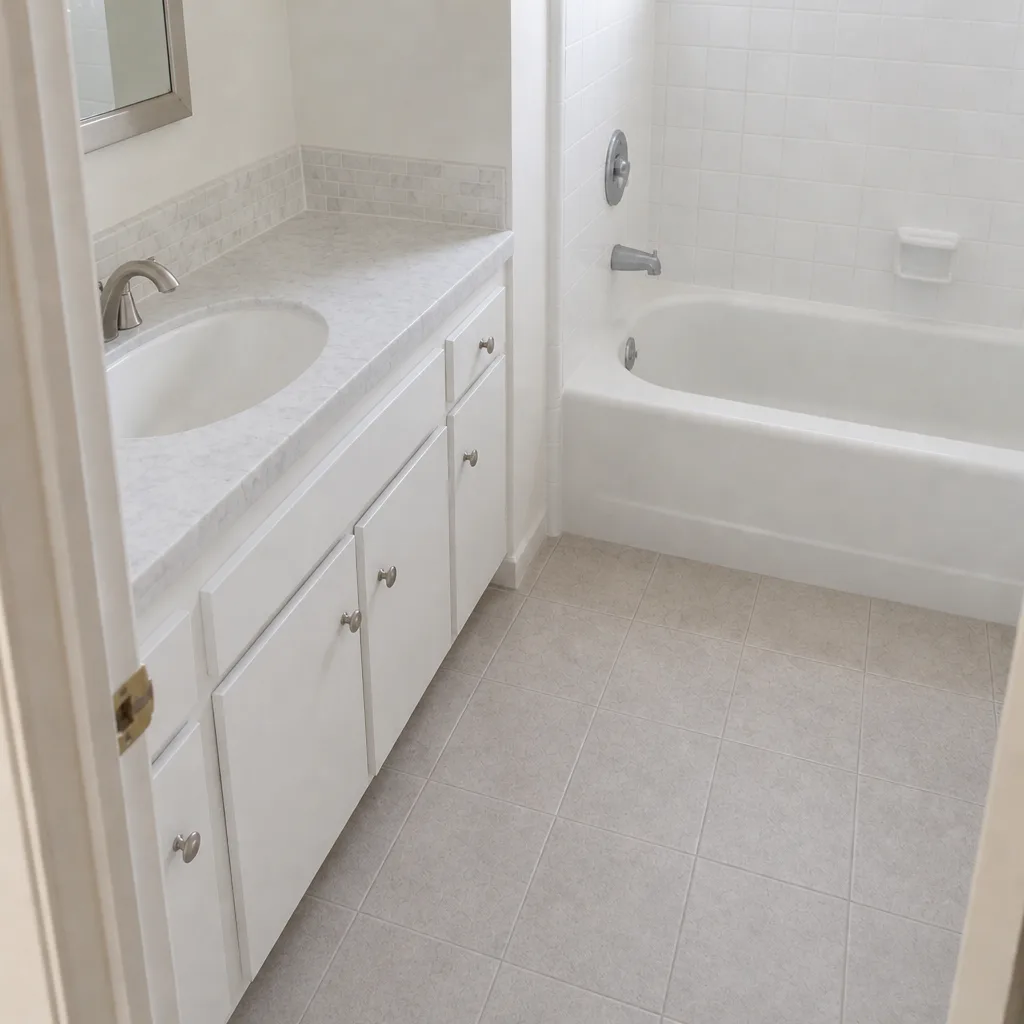
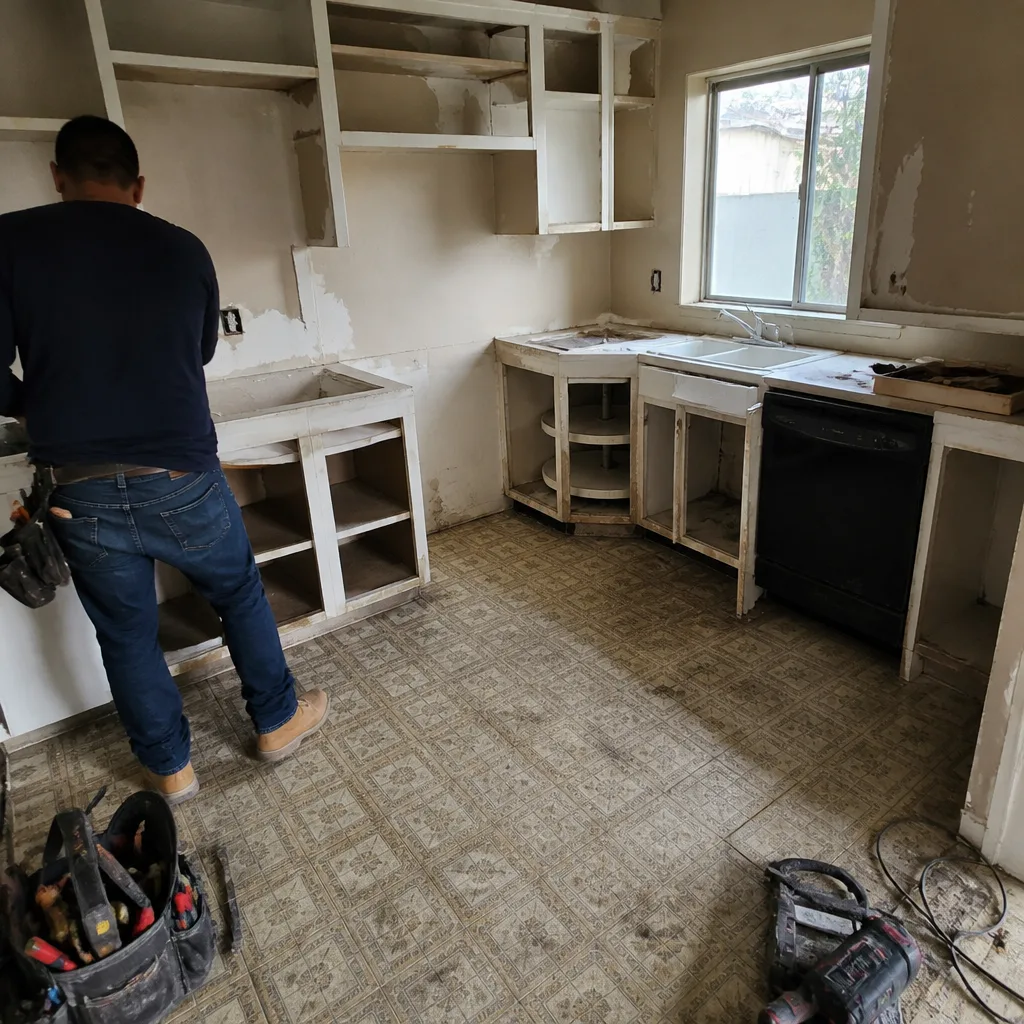
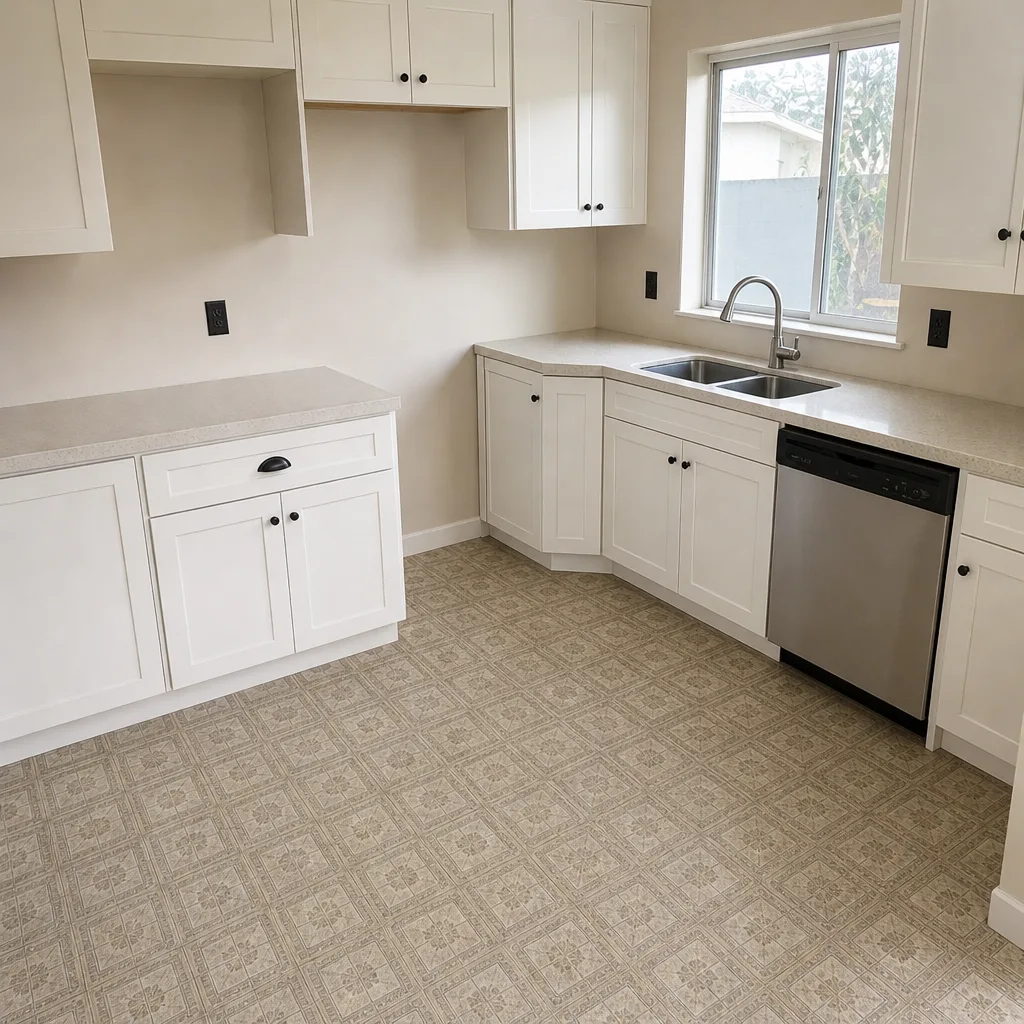
See the difference
 Before
 After
 Before
 After
 Before
 After
When to Call a Professional
If you’re at the point of comparing bids and the contracts in front of you are still missing scope line items, permit documentation, or a defined change order procedure, that’s the moment to get a second opinion. It’s also the moment to stop evaluating if any contractor has already asked for a deposit above the California cap, scheduled demo without a permit, or gone quiet on subcontractor identity. Those aren’t scheduling quirks; they’re structural flags. In our experience in Mission Viejo, homeowners who get a written scope, a written price before work starts, and a written guarantee term up front are the contractors’ customers who don’t end up on the CSI-style horror-story forums. Bradford Remodeling Co Mission Viejo offers free estimates in Mission Viejo; call (833) 734-2429 to schedule, and see how a straight bid reads before you sign.
Frequently Asked Questions

California Business & Professions Code Section 7159 caps the down payment at 10% of the contract price or $1,000, whichever is less. A contractor asking for 30%, 40%, or 50% upfront is operating outside the statute, and that’s often the first concrete warning sign homeowners encounter. Call (833) 734-2429 if you want to see what a compliant payment schedule looks like in writing.
A legitimate scope of work includes line-item breakdowns by trade, named materials with manufacturer and product line specified, quantity totals per line, what’s explicitly excluded, allowance policy, start and completion dates, change order procedure, and warranty terms in the contract body. A one-page estimate is not a scope of work. Call (833) 734-2429 for a free estimate with a full written scope.
Ask for the permit application number before signing, confirm the issuance date against the demo schedule, and check that the permit card is posted at the site from day one. A contractor who schedules demo before the permit is issued is working outside California law. If you’re unsure how to check, call (833) 734-2429 and we’ll walk you through what to look for.
A GC who can’t name their licensed subs before signing may be planning to use unlicensed labor, which makes you liable for problems those workers cause and leaves no bond or insurance backstop. Ask for the sub list and CSLB license numbers in writing, before signature. Call (833) 734-2429 to see what a transparent sub list looks like.
The CSLB license lookup shows license status, classification (B for general building, C for specialty trades), bond status, workers’ comp coverage, and any disciplinary history. It takes about four minutes and reveals far more about a contractor’s compliance record than a reference call. Call (833) 734-2429 if you’d like help interpreting what you find.
Yes: the 40- to 50-year-old housing stock in older Mission Viejo subdivisions routinely uncovers galvanized plumbing, aluminum wiring, and deteriorated subfloor once demo starts, so a bid without a hidden-condition allowance is a bid that will reprice. Clay-heavy soil and grading issues in south Orange County can also pull foundation work into a remodel scope. Call (833) 734-2429 for a local free estimate that accounts for what your specific home is likely to reveal.
The Bottom Line
The warning signs that actually predict a contractor disaster are the ones written into the paperwork before work starts. Deposit above the California cap, vague line items, permit application filed after demo scheduled, unnamed subs, CSLB record with gaps, change order language that reprices the job, no written guarantee term. Each is visible, each is checkable, and each is a hard stop. Homeowners who avoid them get the project done. Homeowners who don’t end up on the next page of this guide. Bradford Remodeling Co Mission Viejo runs a by-the-book operation built on The Garrison Standard: written price, documented scope, background-checked technicians, live phone coverage, and the 365-Day Done Right Promise behind every completed project. Visit the Bradford Remodeling Co Mission Viejo home page for the full lineup of services and guarantees.
Ready to compare a bid that has every line item in writing? Call Bradford Remodeling Co Mission Viejo at (833) 734-2429 for a free estimate. You’ll get a written price before any work starts, a documented scope with named materials, a defined change order procedure, a written guarantee term, and a live person on the phone when you call. Estimates are free, and there’s no pressure schedule – just a straight number you can compare against any other bid you’re holding.
Written by the team at Bradford Remodeling Co Mission Viejo.