Last updated November 17, 2026








Free written scope consultation - allowances, timeline, and change-order rules on paper before a single trade is scheduled
Construction Warning Signs: A Mission Viejo Homeowner’s Reference Guide
Here’s the sentence that costs Mission Viejo homeowners the most money, and almost nobody flags it: “materials as specified or equivalent.” That single clause, buried on page four of a bid, gives a contractor legal cover to swap your Cambria countertop for a no-name slab and your James Hardie siding for an off-brand board, and you approved it the moment you signed. The obvious red flags (no license, no insurance) are the easy ones. The dangerous signs live in the paperwork, the payment schedule, and the crew’s behavior on day three. This guide walks through the textual and behavioral signals that experienced homeowners only learn after getting burned, so you can spot them before the first tool comes out of the truck.
Quick Answer
The biggest construction warning signs in Mission Viejo are not on review sites. They show up in writing: vague scope language like “or equivalent,” change-order clauses with no cap, deposits over 10-15% collected before any work starts, payment tied to calendar dates instead of verified milestones, and a written “warranty” that excludes labor. Behavioral signs matter too: undisclosed subcontractors, a jobsite left messy overnight, and slow or evasive document responses. A contractor who won’t put scope, price, and guarantee in writing before work begins is telling you exactly how the job will go.
Styles & brands we work with
- Kitchen remodeling
- Bathroom remodeling
- Home additions & ADU
- Roofing
- Windows & doors
- Driveway & pavers
- Fence
Table of Contents
- Contract language red flags
- Payment schedule red flags
- On-site behavioral red flags
- Communication red flags that predict ghost jobs
- What a real written guarantee covers in California
- Mission Viejo-specific risk factors
- A 7-step vetting checklist
- Common questions
Contract Language Red Flags
The contract is where a bad job is engineered. By the time a crew shows up, the scope has already been decided, and it was decided by whoever wrote the clauses. Read the bid like a lawyer and you’ll find five phrases that show up over and over in problem jobs.
“Or equivalent.” This phrase appears in nearly every bid as a protective clause for legitimate supply shortages. In a bad bid, it appears next to every line item, which means the entire material package is open. A properly written bid names the brand, the model, and the color, and states that any substitution requires your written approval. If your bid says “KraftMaid or equivalent cabinetry,” ask what “equivalent” means in writing. If the answer is fuzzy, the clause will be used.
Scope described by room, not by line item. “Remodel kitchen: $48,000” is not a scope. It’s a price with a mood. A real scope in a Mission Viejo kitchen remodel breaks out demolition, framing, electrical rough-in, plumbing rough-in, drywall, cabinets, counters, tile, paint, and finish. If any of those are “included as needed,” they will be billed separately later.
Uncapped change orders. Any contract that says “additional work will be billed at prevailing rates” without a written approval process, an hourly figure, and a total cap gives the contractor a blank check. Change orders should be quoted in writing and signed before the work is done, not after.
Arbitration and venue clauses that favor the contractor. A clause requiring disputes to be arbitrated in a county two hours away is a clause designed to make suing uneconomical for you. Legitimate contracts use arbitration occasionally, but never in a way that makes the homeowner’s only recourse impractical.
No written start date and no written completion date. “Start date to be determined” is not a scheduling clause, it’s an escape hatch. If the schedule isn’t a number on a page, it isn’t a schedule.
Our General Contractor in Mission Viejo page walks through what a full written scope actually looks like line by line, if you want a template to compare against.
Payment Schedule Red Flags
Money is the clearest diagnostic in a bid. How a contractor structures payments tells you how they expect the job to go, and it tells you whether they’ve been burned by a homeowner, whether they’re cash-poor, and whether your project is being floated by deposits from someone else’s job. Here’s a structure that raises alarms, top to bottom:
- A deposit over 10-15% before any work starts. A deposit is meant to cover mobilization and materials ordering. It is not a loan. California’s Contractors State License Board guidance treats a deposit as a small fraction of the total, and any contractor asking for 30-50% up front is financing something else with your money.
- Payment tied to calendar dates, not milestones. “Payment due the 15th of every month” means you pay whether the crew shows up or not. Payment should be tied to verified completion of specific phases: rough-in inspection passed, drywall hung, cabinets installed, final walkthrough signed.
- Cash-only requests, or “cash discount” offers with no invoice. Cash-for-discount is a signal that the contractor isn’t carrying the insurance and workers’ comp they claim. If there’s no written invoice, there’s no paper trail for a warranty claim.
- Final payment requested before final inspection. If the last check is due “at substantial completion” rather than “after final inspection and walkthrough,” you lose your only leverage. Hold 5-10% until the punch list is closed and any permits are signed off.
- No written lien releases from subcontractors. In California, unpaid subs and suppliers can file a mechanic’s lien against your house even if you paid the general contractor in full. A legitimate contractor provides conditional lien releases as payments are made.
We’ve watched homeowners in neighborhoods like Deane Homes and the Madrid tract write out a 40% deposit and then wait eleven weeks for framing. The pattern shows up in the paperwork before it shows up on the site.
On-Site Behavioral Red Flags
Crew conduct on day one is a preview of project management quality on day forty. A disorganized jobsite is a disorganized schedule, and a disorganized schedule is where budget overruns come from. Watch for these behaviors during the first week:
- No site protection. Legitimate crews put down floor protection, plastic on doorways, and cover HVAC returns. If demo starts in an unprotected hallway, dust will travel into every room and the contractor will tell you that’s just how remodeling goes. It isn’t.
- End-of-day cleanliness. A squared-away crew sweeps, stacks materials, and secures the site before leaving. A messy site marks a crew that will cut corners on things you can’t see (substrate prep, flashing, waterproofing) because they cut corners on things you can.
- Undisclosed subcontractors. Ask in writing: who will actually be on my property, and are they employees or subcontractors? If the electrical, plumbing, or HVAC trades are subbed out, the subs must be licensed for those trades. California requires specialty licensing for electrical and plumbing work above a low dollar threshold.
- No background checks, no uniforms, no identification. Homeowners should know who is walking through the door before the crew arrives. A contractor who can’t answer “who will be on my property tomorrow?” in writing is asking you to trust a stranger by default.
- Crew speaks for the contractor. If the on-site lead can’t tell you what today’s task is and tomorrow’s task is, the schedule doesn’t exist. That’s the same lead who will tell you “we’ll get to that” about a punch list item in week twelve.
For projects touching kitchens and baths specifically, the behavioral standards are matters of trade discipline as much as courtesy. Our Kitchen Remodeling in Mission Viejo and Bathroom Remodeling in Mission Viejo pages outline how we sequence and stage those jobs so a homeowner can compare like with like.
Communication Red Flags That Predict Ghost Jobs
A ghost job is a project that stalls and never restarts. Before it becomes a ghost, it leaves a trail of communication patterns you can spot in the first two weeks. Watch for these:
- Calls go to voicemail after the contract is signed. Pre-signature, the contractor answers in ten minutes. Post-signature, it’s forty-eight hours and a text. The asymmetry is the signal.
- Answers only arrive in person. If your contractor will discuss scope changes on site but won’t email or text the details, they’re setting up an undocumented change order. Everything in writing, or it didn’t happen.
- Document avoidance. Requesting written confirmation of insurance certificates, subcontractor disclosure, and the schedule should not take three follow-ups. A legitimate contractor sends them without being asked.
- Vague answers to scheduling questions. “Sometime next week” is a schedule that doesn’t exist. A real one has dates and trades annotated.
- The crew changes faces. A rotating cast of unfamiliar workers with no lead on site is a project with no assigned manager. Every job needs one name to call.
Response time patterns are the highest-signal predictor of ghost risk we’ve seen over the years, and it’s the one homeowners most often overlook because it feels rude to complain about. It isn’t rude. It’s data.
What a Real Written Guarantee Covers in California
California law gives a homeowner fewer statutory protections on a remodel than most people assume. There is no universal state guarantee that a contractor’s work will be corrected for free if it fails. The written guarantee in your contract is the only thing that matters, and most “warranties” in construction bids are legally close to meaningless.
Here’s what makes a guarantee actually enforceable, and what to look for:
- It covers labor, not just materials. The three-year manufacturer warranty on your Therma-Tru door covers the door. It does not cover the labor to remove and reinstall it if the install was wrong. A real guarantee covers the labor to correct the work.
- It names what’s covered in plain terms. “All work performed under this contract” is a covered statement. “Structural defects only” is a much narrower promise, even if it sounds bigger.
- It has a stated duration. A guarantee with no stated term is a guarantee with no term you can enforce.
- It excludes only obvious exclusions. Damage from a fire, flood, or a homeowner’s own modification is a fair exclusion. “Improper use” is not, and it’s a common out-clause.
- It doesn’t require you to file a claim within an unreasonably short window. A fourteen-day claim window on a two-month project is a promise shaped to never be used.
For reference, every completed Bradford project carries the 365-Day Done Right Promise: if the work fails within a year of completion, we come back and correct it at no charge. That’s what a written guarantee should look like – a duration, a scope, and a named remedy, signed before work begins.
Mission Viejo-Specific Risk Factors
Mission Viejo has a few local conditions that raise the risk on remodeling projects in ways that don’t show up in a generic red flag list.
First, the HOA and city permit overlays. Most of Mission Viejo is governed by HOA rules on exterior alterations (paint colors, fence styles, hardscape material), and many tracts require architectural committee approval before work starts. A contractor who doesn’t ask about HOA approval on a project touching exterior surfaces is a contractor who will have you tearing out a fence or repainting a house on your own dime. Spec Belgard hardscaping or ActiveYards fencing in writing, and get the HOA sign-off before the material ships.
Second, the age of the housing stock. Much of Mission Viejo was built between the late 1960s and the 1990s. That matters because homes in that window routinely have polybutylene or early copper supply lines, undersized electrical services by modern code, and original single-pane windows. Any contractor bidding a kitchen or bath remodel in Mission Viejo without addressing what’s behind the wall is either guessing or planning a change order. Ask the question in writing: what happens if the plumbing behind this wall is not code-compliant?
Third, the hillside and slope lots throughout the city. Homes on grade changes in neighborhoods like the ones near Lake Mission Viejo often have drainage and retaining concerns that surface during demo. A written scope should state who is responsible for unforeseen site conditions, at what rate, and with what cap.
Fourth, the climate. Our dry summers and Santa Ana wind events are hard on exterior paint, caulk joints, and any deck or hardscape that wasn’t installed with proper drainage and expansion joints. A hardscape installed without expansion joints will crack within two summers, and the installer will tell you it’s normal. It isn’t.
A 7-Step Vetting Checklist
Here’s the sequence we recommend to any Mission Viejo homeowner comparing contractors. Do these in order, and the bad options will remove themselves before you sign anything.
- Verify the license active status on the CSLB website before any meeting. Confirm the classification matches the work being bid.
- Ask for the certificate of insurance directly. General liability and workers’ comp, sent as a certificate naming you as the additional insured.
- Request the written scope in line-item form. Materials named by brand and model, labor broken out by phase.
- Read the payment schedule against the scope. Deposits under 15%, milestone-based payments, 5-10% held to final inspection.
- Ask who will be on site, by name and trade, and whether they are employees or subcontractors. Get it in writing.
- Read the guarantee clause. Confirm duration, scope of coverage, and that labor is included.
- Confirm scheduling in writing. Start date and completion date, both numbers, on paper.
You can compare any checklist against what Bradford publishes on our Bradford Remodeling Co Mission Viejo home page, or read the brand roster we work with (KraftMaid, Wellborn, Cambria, Kohler, Moen, GAF, James Hardie, Therma-Tru, Belgard, Unilock, and more) so you know the specifications are traceable rather than open-ended.
Common Mistakes to Avoid
- Signing a bid with “or equivalent” next to the material specs. That phrase legally allows substitution of nearly everything on your project. If it’s in the bid, it will be used.
- Paying more than 15% deposit up front. A contractor asking for 40% up front is cash-flowing your job with your own money, and the schedule usually reflects it.
- Accepting a “warranty” that covers materials only. If the guarantee doesn’t cover labor, the labor isn’t covered by anyone. You’ll pay for the redo of a bodged install even with a manufacturer warranty in hand.
- Skipping the HOA approval step on an exterior project in Mission Viejo. A repaint or new fence installed without architectural committee approval can be required to come down, at your cost.
- Ignoring what’s behind the wall. A remodel scoped without a contingency for plumbing, electrical, or framing surprises will produce a change order in week two. Ask for the contingency in the bid, in writing, with a cap.
- Letting scope changes get approved verbally. A change order that wasn’t signed before the work was done is a number the contractor gets to choose after the fact.
- Paying the final invoice before the final walkthrough. Once you’ve paid, you’ve lost your only leverage on the punch list.
See the difference
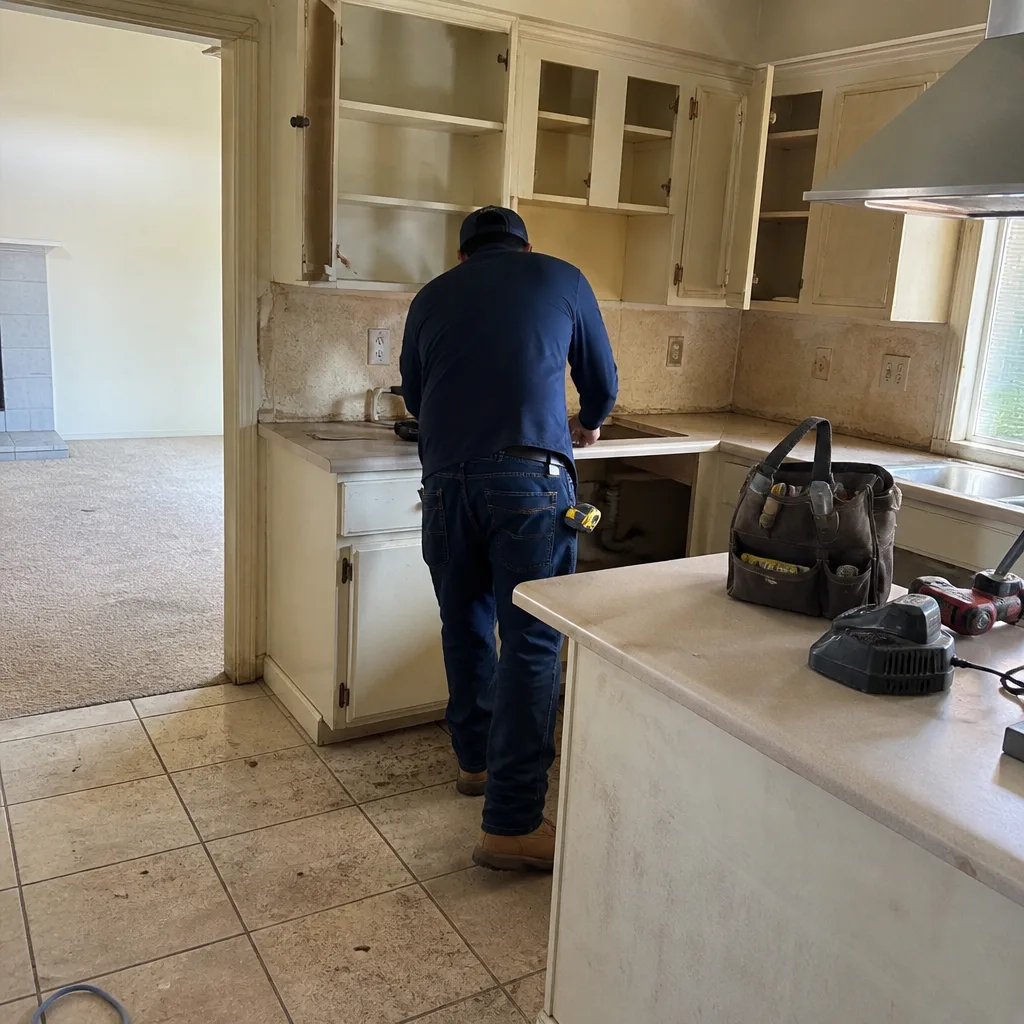 Before
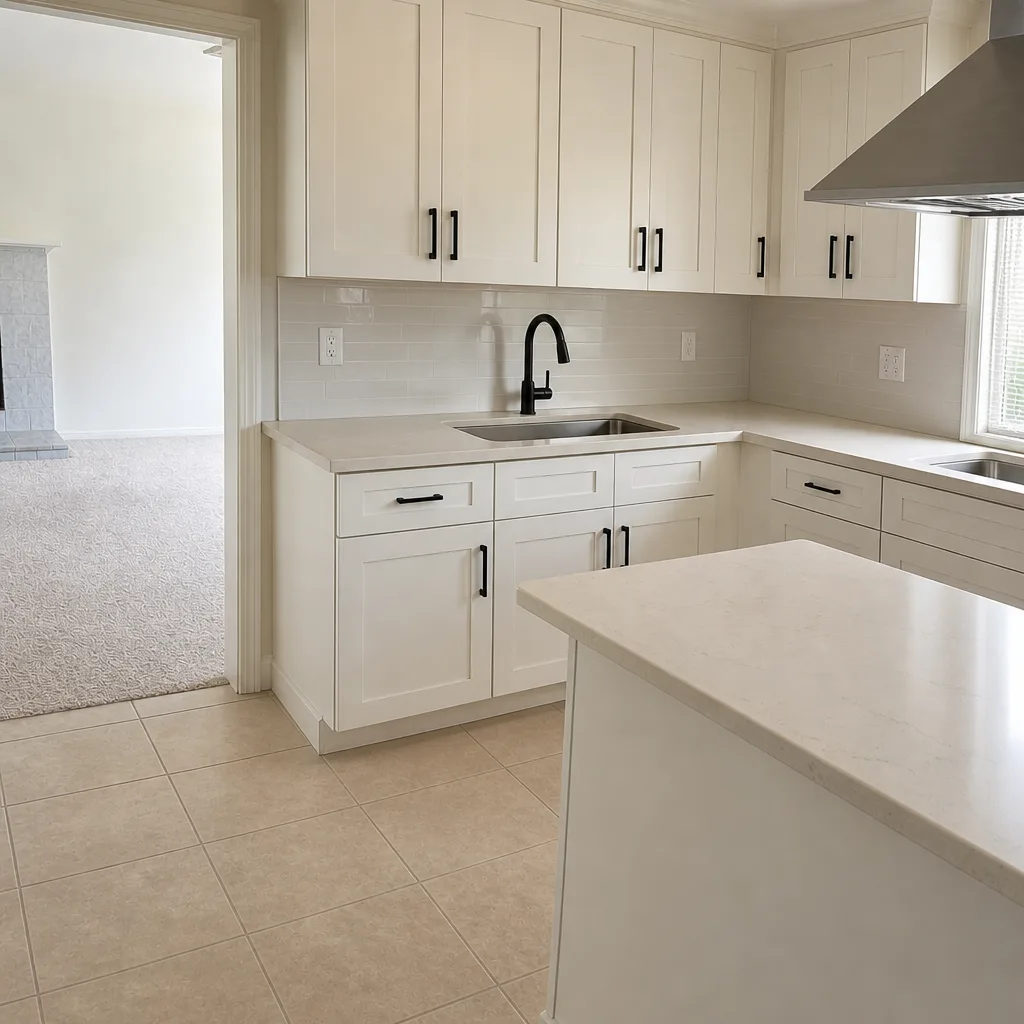 After
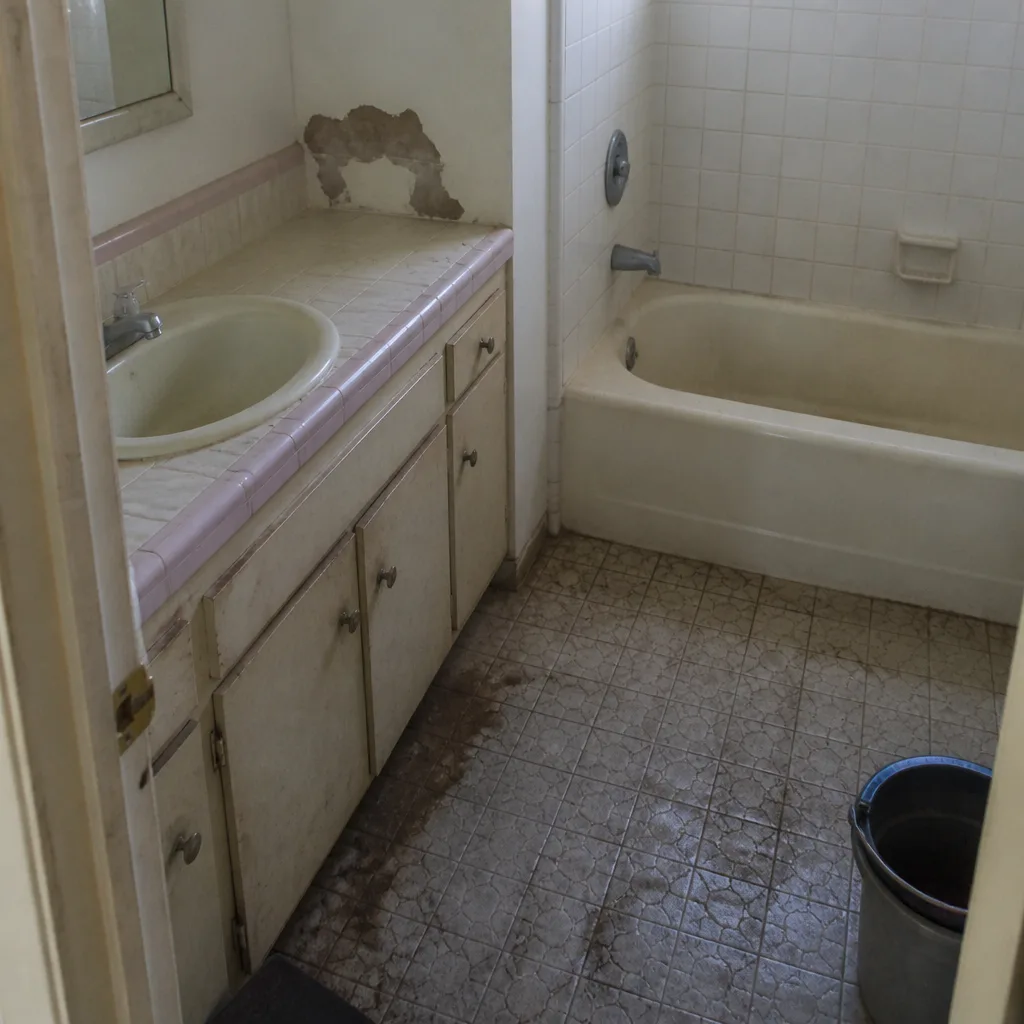 Before
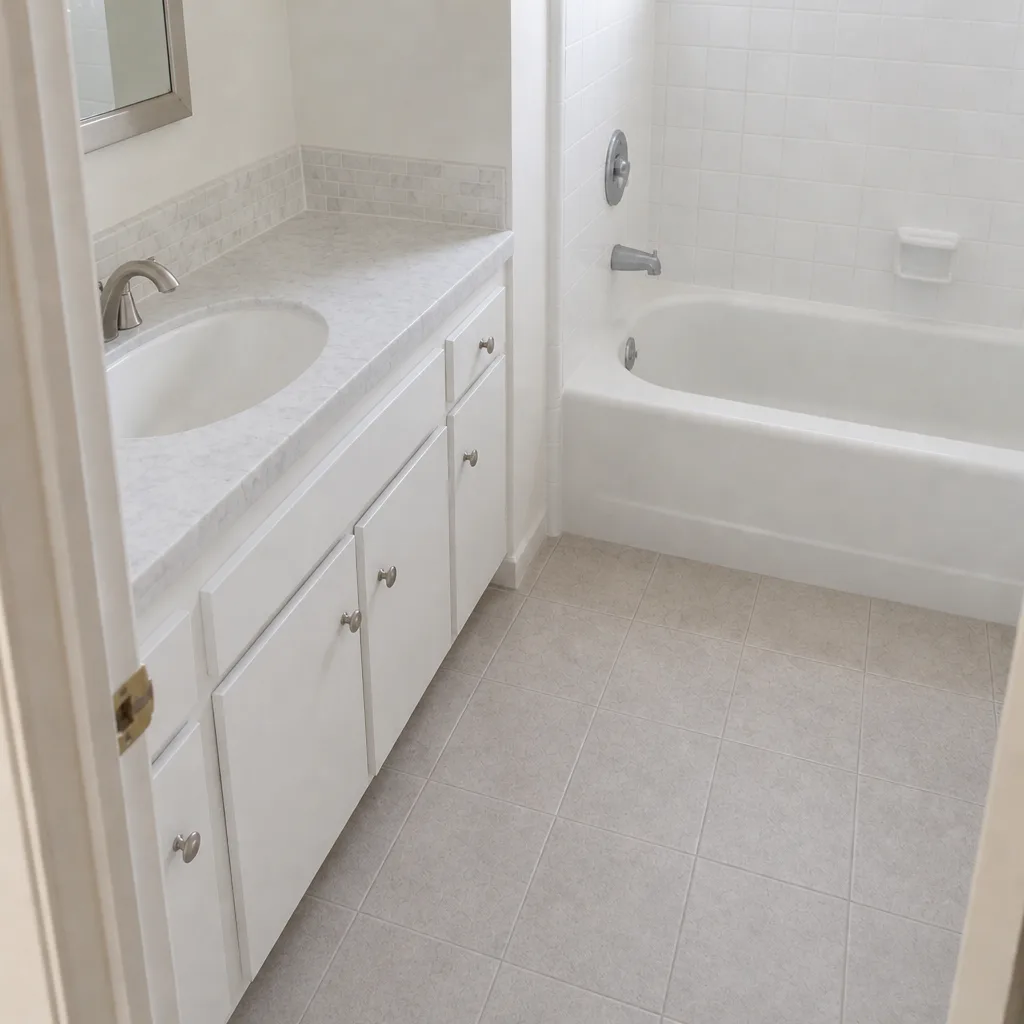 After
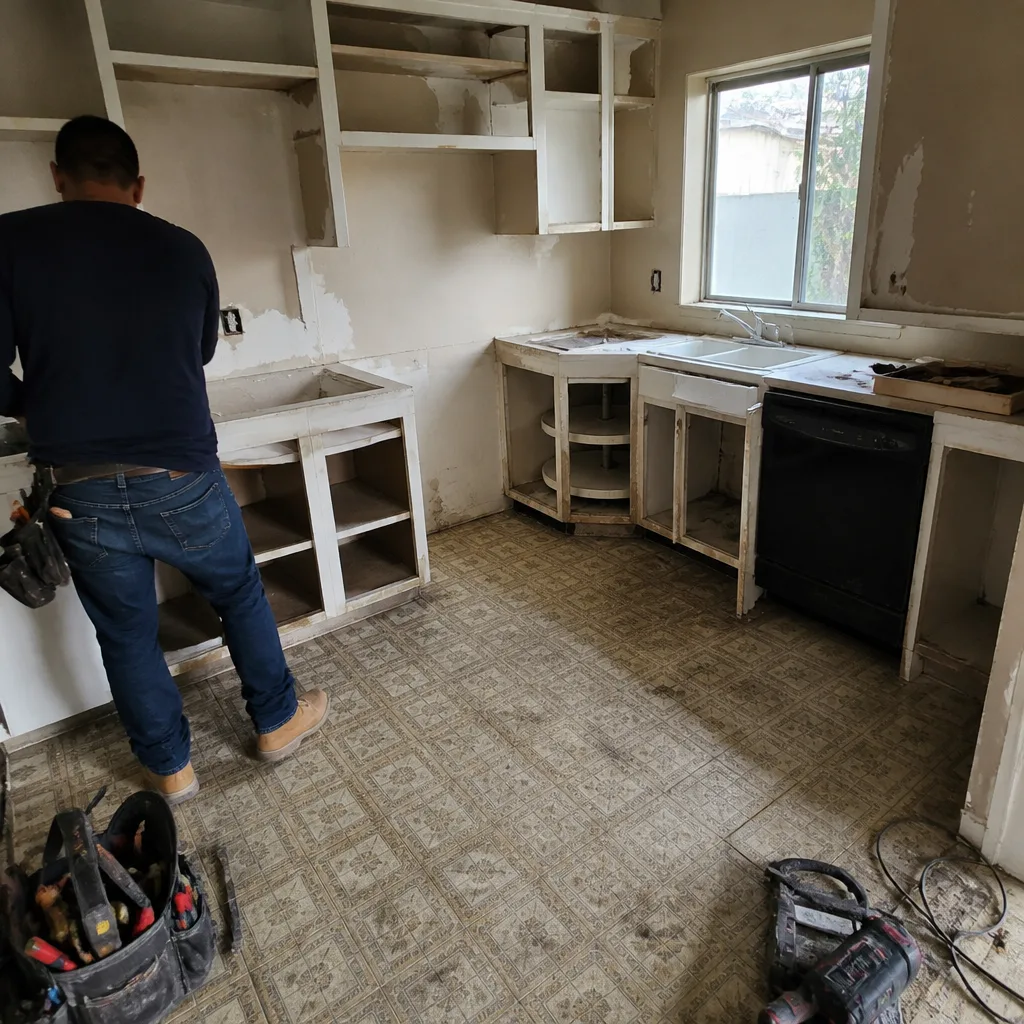 Before
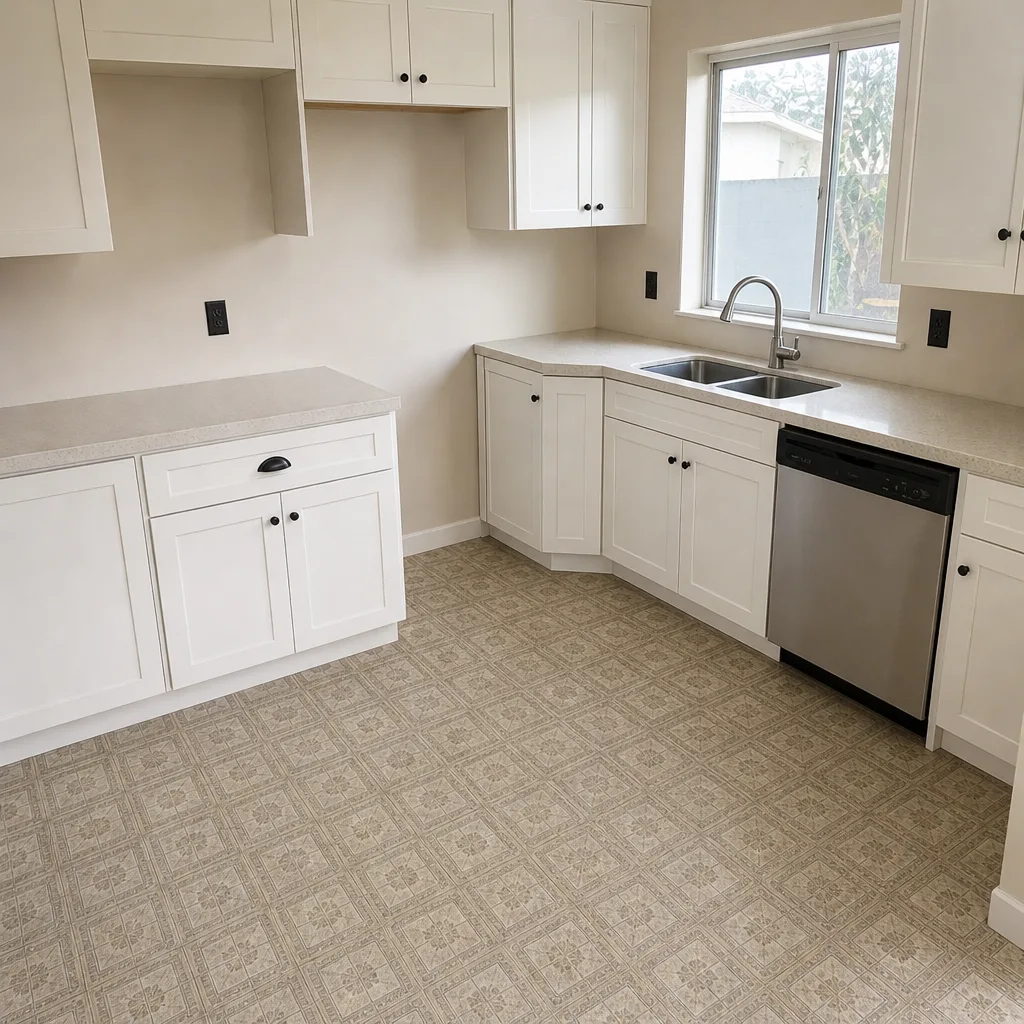 After
When to Call a Professional
If you’re comparing bids and one of them contains any of the phrases in this guide, or if you’ve started a project and the payment schedule has drifted from the contract, call a professional who will put everything in writing before the first tool comes out. The scenarios that most warrant a second opinion: a bid with open-ended scope language, a payment schedule with a deposit over 15%, a guarantee that names only materials, a subcontractor disclosure that isn’t written down, or a schedule that exists only verbally. Bradford Remodeling Co Mission Viejo offers free written estimates in Mission Viejo – call (833) 734-2429. Our technicians have up to 22 years of experience, every project gets a written price before work starts, and every completed job carries the 365-Day Done Right Promise in writing.
Frequently Asked Questions
“Materials as specified or equivalent” without a named brand and model is the biggest red flag, because it legally allows substitution of nearly every material in your project. If the bid names KraftMaid, Cambria, or James Hardie but qualifies the name with “or equivalent,” the specification is open. A properly written bid names the brand, model, and color, and requires your written approval for any substitution. Call (833) 734-2429 for a free estimate written that way.
A deposit of 10-15% before work starts is typical and reasonable for most Mission Viejo remodels. Anything above that is a sign the contractor is financing other work with your money. The rest of the payments should be tied to verified milestones (rough-in inspection passed, cabinets installed, final walkthrough signed), not to calendar dates. Call (833) 734-2429 for a written payment schedule before you sign anything.
A verbal warranty is very difficult to enforce in California because you can’t prove what was said. Only the written guarantee in your signed contract has real teeth. That’s why every Bradford project gets a written 365-Day Done Right Promise: if the work fails within a year of completion, we come back and correct it at no charge. Ask any contractor you’re considering for the guarantee in writing before you sign. Call (833) 734-2429 to see ours.
Most Mission Viejo exterior projects touching paint, fences, hardscape, or roofing need HOA architectural committee approval before work begins, and the homeowner is usually the one responsible for obtaining it. A legitimate contractor flags the HOA requirement in the written scope and provides the material specs you need for the submission. If your bid doesn’t mention HOA approval on an exterior project, ask why in writing. Call (833) 734-2429 with the address and we’ll walk through what typically applies.
Look at the communication pattern in the first two weeks. A contractor who answers calls promptly, confirms scope changes in writing, and gives you a schedule with dates is a contractor who finishes. A contractor who goes quiet after signature, discusses changes on-site only, and avoids written confirmation is showing you the pattern of a job that will stall. Call (833) 734-2429 and a live person picks up 24/7, before any contract is signed.
No. “Sometime in spring” is not a schedule; it’s an excuse to start whenever a crew and materials align. A real schedule has a written start date, a written completion date, and the phases annotated against both. If the bid doesn’t have those as numbers on a page, you have no enforceable schedule. Call (833) 734-2429 for a written price and written schedule before work begins.
The Bottom Line
The most expensive contractor warning signs are the quiet ones. A missing license or an expired insurance certificate is loud; “or equivalent” in the scope, an uncapped change-order clause, a 40% deposit, and payment tied to calendar dates are silent, and by the time the consequences show up in week six, the contract has already decided the outcome. Mission Viejo homeowners face extra layers of risk from HOA overlays, aging housing stock, hillside lots, and our dry-climate stress on exteriors. The defense is the same every time: get the scope, the price, the schedule, and the guarantee in writing before the first tool comes out of the truck. Everything else is a conversation you’ll have later, on unequal footing.
Contact
If you’d like a second read on a bid you’ve received, or a written price on a Mission Viejo project of your own, call (833) 734-2429 for a free estimate. A live person answers 24/7. Every Bradford Remodeling Co Mission Viejo project gets a written price before work begins, background-checked and uniformed technicians on every job, and the full-year 365-Day Done Right Promise at close – signed, in your hand, before we leave the site.
Written by the team at Bradford Remodeling Co Mission Viejo.