Last updated November 17, 2026







Free written scope consultation - allowances, timeline, and change-order rules on paper before a single trade is scheduled
DIY vs Professional Bathroom Remodeling: What’s Safe to Do Yourself
Here’s the counterintuitive part: in California, you can legally tear out your own tile, paint your own walls, and swap your own vanity without asking anyone’s permission. But the moment you move a drain two inches or add a GFCI outlet without pulling a permit, you’ve created an uninsured condition – and a standard HO-3 homeowner’s policy won’t cover the water damage that follows. This guide draws the line at liability, not ability. You’ll learn the exact permit trigger points in California bathroom work, what unpermitted construction does to an insurance claim and a resale disclosure, which jobs are genuinely safe for a careful homeowner in Mission Viejo, and how a hybrid split with licensed trades keeps the whole project clean on paper and in the ground.
Quick Answer
Safe DIY in a bathroom means cosmetic and non-structural finish work: painting, tile installation over a proper substrate, swapping a vanity without moving plumbing, and replacing a toilet on an existing flange. Anything that moves supply or drain lines, adds or relocates electrical circuits, or changes ventilation requires a permit and a licensed trade – and doing it unpermitted can void insurance coverage for water damage and complicate your California seller disclosures. The dividing line is permit exposure and liability, not whether you’re handy.
Styles & brands we work with
- Kitchen remodeling
- Bathroom remodeling
- Home additions & ADU
- Roofing
- Windows & doors
- Driveway & pavers
- Fence
Table of Contents
- Where California Draws the Permit Line in a Bathroom
- What Unpermitted Work Does to Your Insurance and Your Resale
- The Safe DIY List: Skill and Tool Audit
- The Hybrid Approach: Doing Demo, Hiring Rough-In
- How to Write a Contract That Splits the Work Cleanly
- The Hidden Cost of DIY Mistakes
- Mission Viejo Conditions That Affect Your Build
- When to Call a Professional
Where California Draws the Permit Line in a Bathroom
The trigger points are more specific than most homeowners expect. California adopts the Uniform Plumbing Code and the California Electrical Code through Title 24, and local building departments apply them. In practice, here is where you cross from “cosmetic” into “permit required,” and you can verify every one of these with your local building department or a quick read of the current code adoption for Mission Viejo. Our technicians – some with up to 22 years in the trade – flag these same three triggers on nearly every bathroom consultation.
The three permit trigger points for bathroom work in California:
- Moving or extending supply or drain lines. Relocating a sink, shifting a shower drain, or adding a second vanity sink means altering the drain-waste-vent (DWV) system. That work needs a plumbing permit and, in most jurisdictions, an inspection of the rough-in before walls close. A vanity swap on the same footprint is usually exempt; moving the drain two inches is not.
- Adding or relocating electrical circuits. New outlets, a relocated switch, added recessed lighting, or a heated floor circuit all require an electrical permit. Bathroom receptacles must be GFCI-protected per the current California Electrical Code, and the code applies to the whole circuit serving the bathroom, not just the new outlet.
- Changing ventilation. Adding an exhaust fan, relocating one, or changing how the duct routes through the roof or wall triggers a mechanical permit. Ventilation matters in a bathroom because moisture has to leave the room – a fan ducted into the attic instead of outdoors is a defect an inspector will catch and a buyer’s inspector will flag.
Tiling, painting, cabinet replacement without plumbing relocation, and fixture swaps on existing connections generally fall outside permit territory. The distinction is whether you’re changing the building’s systems or its surfaces. When in doubt, call the building department and ask a direct question: “I’m doing X in a single-family home – does that need a permit?” The answer takes five minutes and settles the question before you spend money.
What Unpermitted Work Does to Your Insurance and Your Resale
This is the part most DIY guides skip entirely, and it’s the part that actually costs money. A standard HO-3 policy covers sudden and accidental water damage. It does not cover damage that flows from construction done without required permits or contrary to code – and insurers increasingly ask. If a supply line you relocated leaks into the ceiling below and the adjuster finds the work was never permitted, you may be looking at a denied or reduced claim on a loss that runs into the tens of thousands.
The financial calculus, plainly:
- On a claim: Unpermitted plumbing or electrical work gives the insurer grounds to deny or subrogate. You eat the cost of the water loss plus the cost to correct the work.
- On a sale: California requires sellers to disclose known material defects and any work done without permits on the Transfer Disclosure Statement. Buyers’ inspectors in Mission Viejo routinely check permit history at the city, and an unpermitted bathroom is a price concession or a failed deal waiting to happen.
- On resale value: Lenders can refuse to finance over unpermitted additions or alterations. A bathroom that appraises clean with permits is worth more than the same bathroom with a cloud on the record.
Permits for a typical bathroom remodel in Mission Viejo run a few hundred dollars for the permit itself, plus inspection scheduling. That’s a small line item against a denied six-figure claim. A remodel done to standard keeps the whole chain intact: clean title, clean disclosure, insurable home. The general contractor in Mission Viejo handling permitted work is pulling those permits and passing those inspections as a matter of course, and that paper trail belongs to you when the job closes.
The Safe DIY List: Skill and Tool Audit
These are the jobs a careful, patient homeowner can genuinely take on. They are surface-level and reversible. Each one comes with the specific tools required and the exact place most people fail, because knowing where the failure happens is most of the preparation. In our experience the failures are almost never about skill – they’re about skipping a prep step to save a weekend.
Tile installation
Tools: wet saw or snap cutter, notched trowel sized to the tile, mixing paddle and drill, grout float, spacers or leveling system, rubber mallet. Where DIYers fail: inadequate backer board and uncured thinset. Cement backer board has to be screwed down on the manufacturer’s schedule, seams taped and bedded, and thinset mixed to the right consistency – too wet and it never cures to full strength, and the tile pops months later. A waterproofing membrane over the backer board is non-negotiable in a wet area.
Painting
Tools: painter’s tape, quality brush and roller, sanding block, drop cloths. Where DIYers fail: skipping the sand-and-prime step over patched drywall. Bathrooms are humid; paint applied over dusty or glossy surfaces peels at the edges within a season. Use a bath-rated paint with a mildew-resistant additive.
Vanity swap (same plumbing footprint)
Tools: level, stud finder, drill, supply-line wrench, bucket. Where DIYers fail: not checking the floor is level before setting the cabinet, and reusing old supply lines. Old braided lines fail at the crimp – replace them. If the new vanity shifts the drain, you’ve crossed into permit territory, and that’s a plumber’s job.
Toilet replacement
Tools: new wax ring, adjustable wrench, bucket, sponge. Where DIYers fail: reusing the old wax ring or setting the toilet without checking the flange is flush and intact. A rocking toilet with a compromised seal weeps under the floor for months before you notice.
For the broader picture of what a permitted, fully finished bathroom involves, our bathroom remodeling in Mission Viejo page lays out scope and sequencing. Any finish work you take on sits on top of that structure, and it only works if the structure underneath is right.
The Hybrid Approach: Doing Demo, Hiring Rough-In
The smartest split for a homeowner who wants to save money without taking on liability is the hybrid: you do the demolition and the finish painting, a licensed plumber and electrician do the rough-in and pull the permits, and you close up and finish. You save labor hours on the work that needs no license, and the licensed trades handle the systems that carry the permit and the insurance exposure. This is the split we see work cleanly most often.
How the hybrid sequence runs:
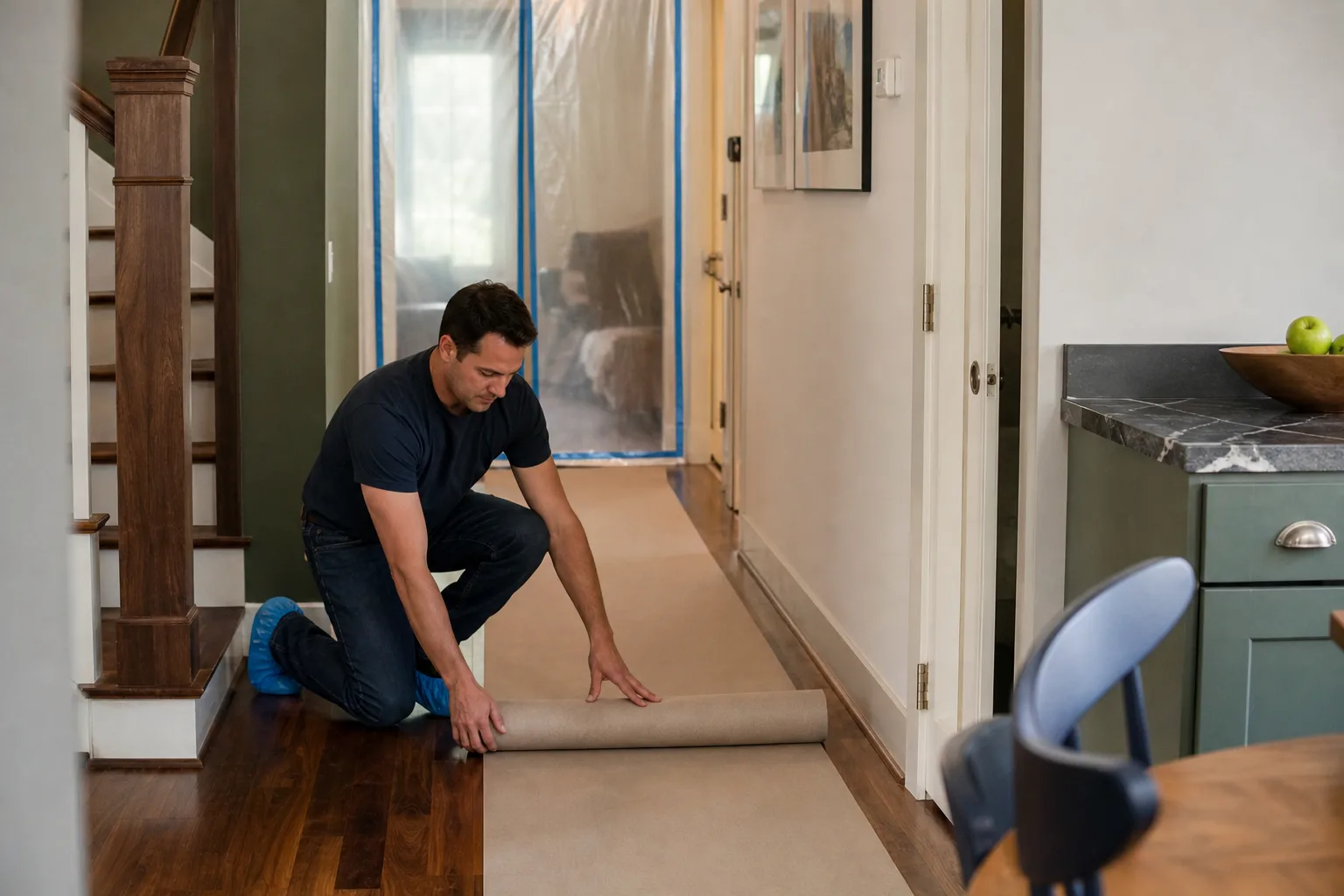
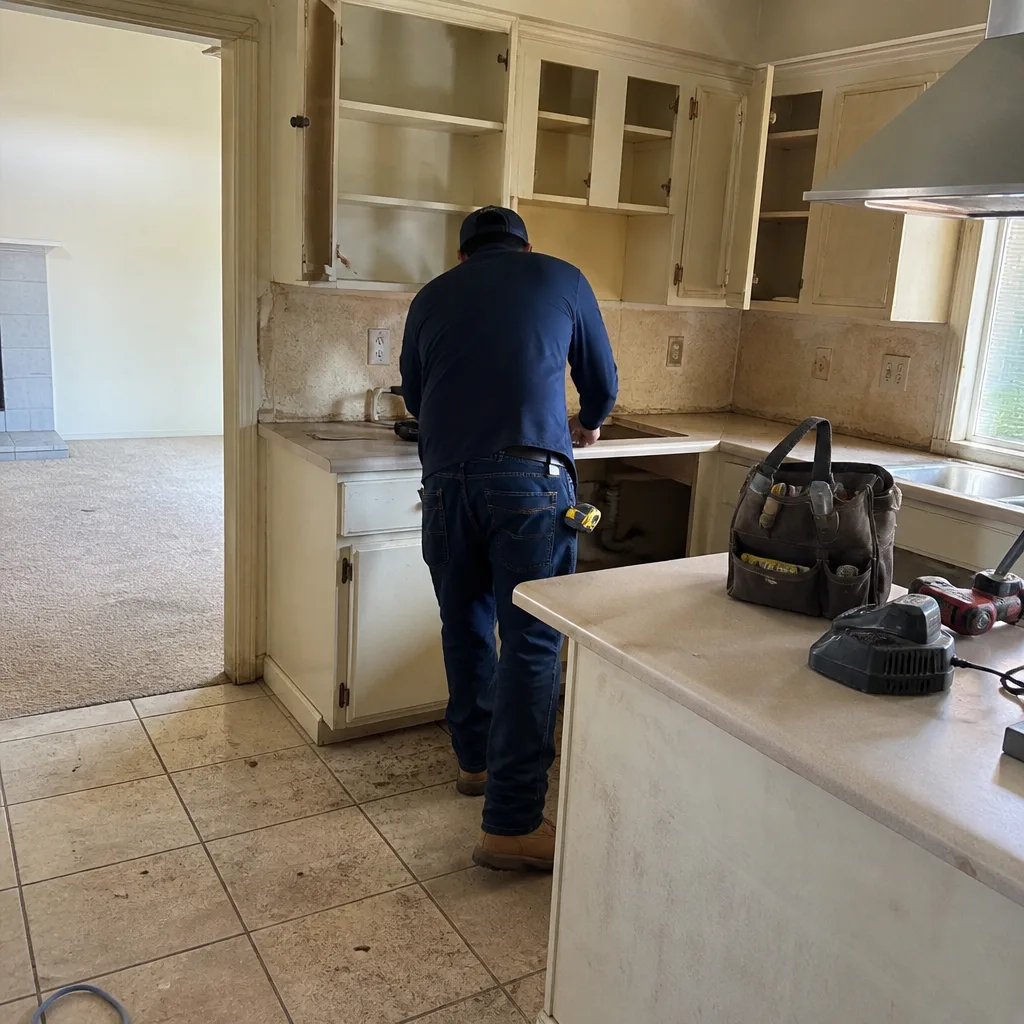
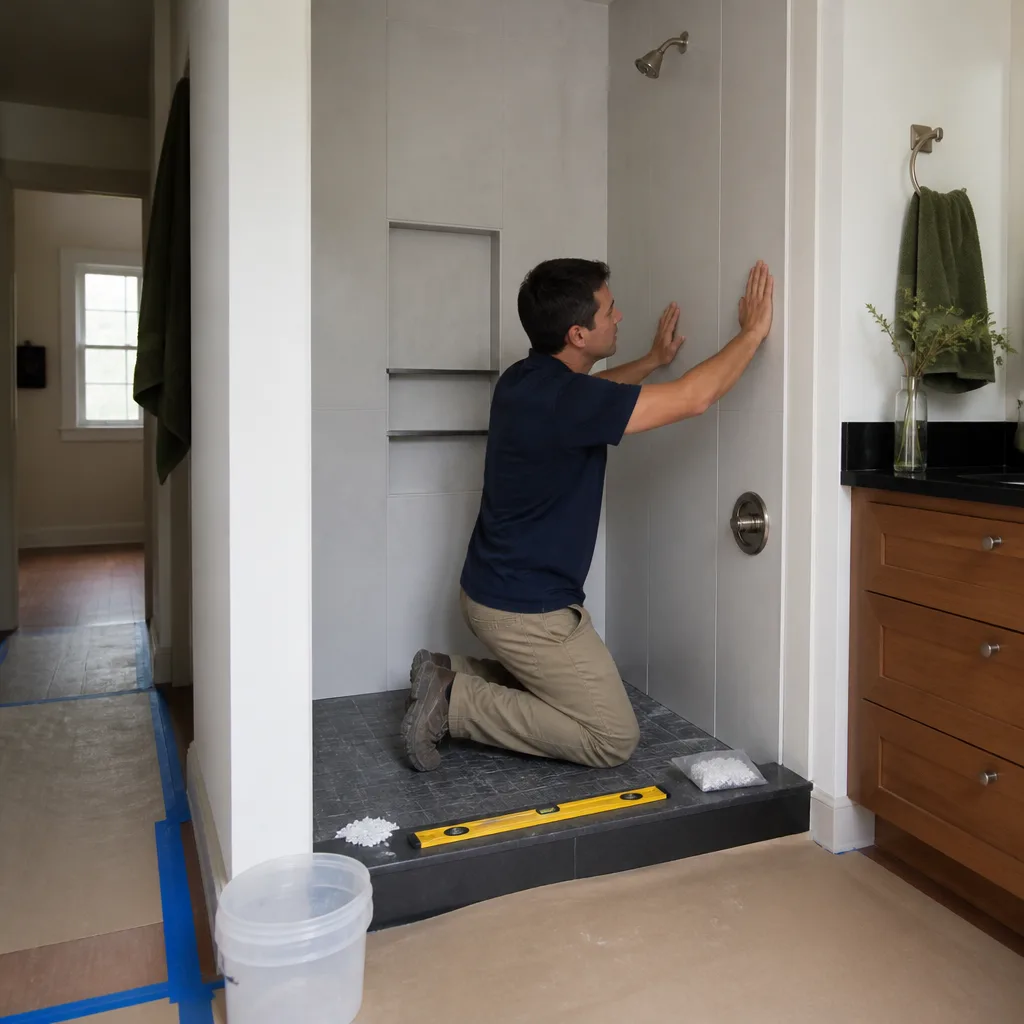
- You demo. Remove tile, vanity, toilet, drywall as scoped. Bag and haul debris. Protect the floor and the adjacent rooms.
- Licensed trades rough-in. Plumber relocates or extends the DWV and supply, electrician adds circuits and GFCI protection, HVAC or mechanical handles ventilation. Each pulls its own permit.
- Inspections pass. The rough-in is inspected before anything closes. You get the signed inspection card – keep it.
- You close up and finish. Backer board, waterproofing, tile, paint, trim, fixtures on existing connections, final caulk.
- Final inspection. The building department signs off on the whole job.
The hybrid works because the risky, permit-bearing work sits with the licensed trades and the labor you can legally do sits with you. What it requires is coordination – the inspection happens on the building department’s schedule, not yours – and a written contract that spells out exactly where your scope ends and the licensed scope begins. In a Mission Viejo bathroom with a slab foundation, the plumbing rough-in is often the longest lead time, so the schedule gets built backward from the plumber’s availability, not forward from your demo weekend.
How to Write a Contract That Splits the Work Cleanly
A hybrid project succeeds or fails on the paperwork. When two parties – you and a licensed trade, or you and a general contractor – touch the same bathroom, the contract has to say who does what, who pulls which permit, who is responsible for what goes wrong, and who holds the warranty period. Handshake scope is where hybrid projects go sideways. Every project Bradford Remodeling Co Mission Viejo runs carries a written price before any work starts and the 365-Day Done Right Promise in writing at close; that’s The Garrison Standard, and it’s the same discipline any written contract should follow. Your split contract should carry four things:
- Scope by trade. A line-item list of exactly which tasks are yours and which belong to the licensed trade. “Demo to the studs, including tub and tile removal, homeowner.” “Relocate drain and supply to new vanity location, licensed plumber.”
- Permit responsibility. Named explicitly – who pulls the plumbing permit, who pulls electrical, who schedules the inspections, and that the signed inspection cards come to you.
- Interface points. The dates and conditions where one scope hands off to the other. “Homeowner demo complete and debris removed by [date], rough-in to begin the next business day.”
- Warranty and correction terms. What the licensed trade covers and for how long, and what happens if their rough-in fails after you’ve closed the walls. A written year-long correction guarantee on their work is the standard to ask for.
Put every price and every guarantee in writing before a single tool comes out. If a trade won’t put scope and warranty in writing, that’s the answer you needed. Whole-home coordination for this kind of split is what our Bradford Remodeling Co Mission Viejo home team does as a matter of routine.
The Hidden Cost of DIY Mistakes
The DIY mistake that costs the most is the one you don’t see until the floor fails. A botched tile job over uncured or over-wet thinset shows itself as hollow-sounding tile and cracked grout lines within a season, and the fix is demolition and redo – not a patch. Improper backer board installation – wrong fastener spacing, unbedded seams, no waterproofing membrane in the shower – turns into hidden moisture damage behind the wall. The correction cost is the rework plus the damaged substrate underneath.
Typical rework ranges a licensed contractor quotes to correct DIY failure in a Mission Viejo bathroom:
- Tile removal and reinstall over failed thinset: roughly $18 to $30 per square foot of floor or wall, including demolition of the failed work and new substrate.
- Shower rebuild after failed waterproofing: $3,500 to $7,500 for a standard shower, including pan, membrane, tile, and drain work.
- Toilet reset and subfloor repair after a failed wax seal: $400 to $1,200 depending on how much subfloor needs replacing.
- Electrical correction for unpermitted or non-GFCI bathroom circuits: $300 to $900 for a licensed electrician to correct, permit, and inspect.
Those ranges are for correction, not for the original job. The math that matters: a $4,000 shower rebuild after a failed DIY waterproofing is money on top of what you already spent on materials and weekends. Permitted, warrantied work moves that risk to the contractor. Our kitchen remodeling in Mission Viejo team sees the same correction math in kitchens – failed tile, failed waterproofing, failed transitions – and the fix cost is always higher than doing it right once.
Mission Viejo Conditions That Affect Your Build
Local conditions change what “safe DIY” means in practice. Mission Viejo sits in a warm, dry climate with low humidity most of the year, and that cuts both ways in a bathroom. On the positive side, exterior drying is fast and mold pressure between finishes is lower than in a coastal or humid climate. On the negative side, the dry air makes thinset and grout cure faster than the bag says – the working time you get on a Riverside job is not the working time you get here. Mix smaller batches than the label suggests, especially on a hot afternoon.
Mission Viejo housing stock runs toward 1970s through 1990s construction, and that matters for two reasons. First, moisture barriers and shower waterproofing from that era are frequently at end of life; if you pull tile and find no membrane or a failed one, that’s a code correction, not a cosmetic fix. Second, older bathrooms may have galvanized or early copper supply lines that fail when disturbed – a vanity swap that requires shutting off a corroded angle stop often ends with a plumber. The bathroom remodel scope in a Mission Viejo home commonly includes replacing the shutoff valves and supply lines as part of the finish work, and that’s a small add that saves a flood later. Slab-on-grade foundations are common here too, so moving a drain means cutting concrete – another reason the drain stays where it is unless a permit and a plumber are already in the plan.
Common Mistakes to Avoid
- Moving a drain “just a little” without a permit. Two inches is a plumbing alteration. The inspector and the insurer treat it as unpermitted work, and correcting it later means opening the floor or wall again.
- Adding a bathroom outlet without GFCI protection. The current California Electrical Code applies to the whole circuit serving the bathroom. A non-GFCI outlet in a wet room is a defect and an insurance exposure.
- Tiling over greenboard or drywall in the shower. Drywall is not a wet-area substrate, no matter what the old bathroom had. Use cement backer board with a waterproofing membrane, or the shower fails behind the tile.
- Ducting the exhaust fan into the attic. Venting moist air into the attic instead of outdoors puts the moisture into the roof structure. It’s a defect an inspector and a buyer’s inspector both catch.
- Skipping the rough-in inspection to save a week. The rough-in has to be inspected before the walls close. If it’s covered, the inspector can require it be opened again.
- Reusing old supply lines on a vanity swap. Braided lines fail at the crimp. On a 1990s Mission Viejo bathroom, replace them while the vanity is out.
- Not writing the hybrid scope down. Handshake splits between your demo and a licensed trade’s rough-in are where schedule and warranty disputes start. Get it in writing.
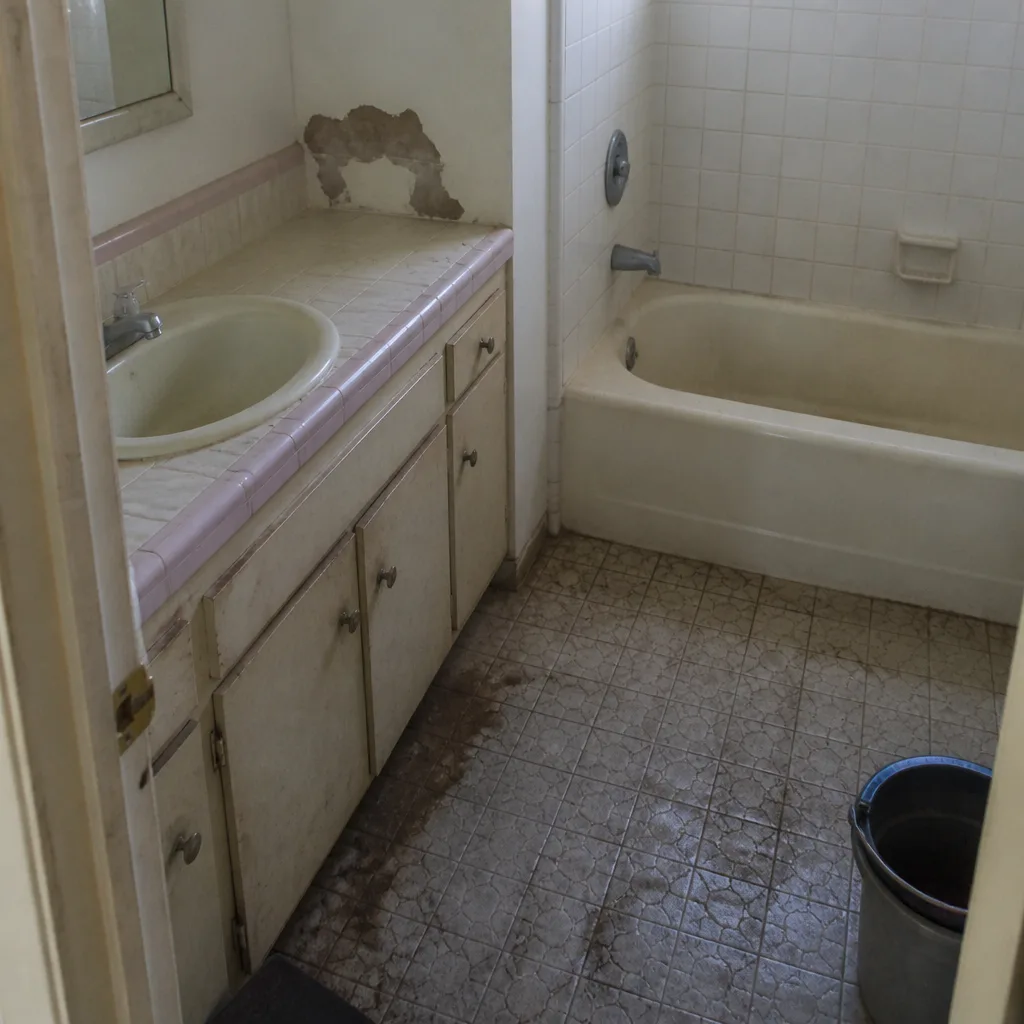
See the difference
 Before
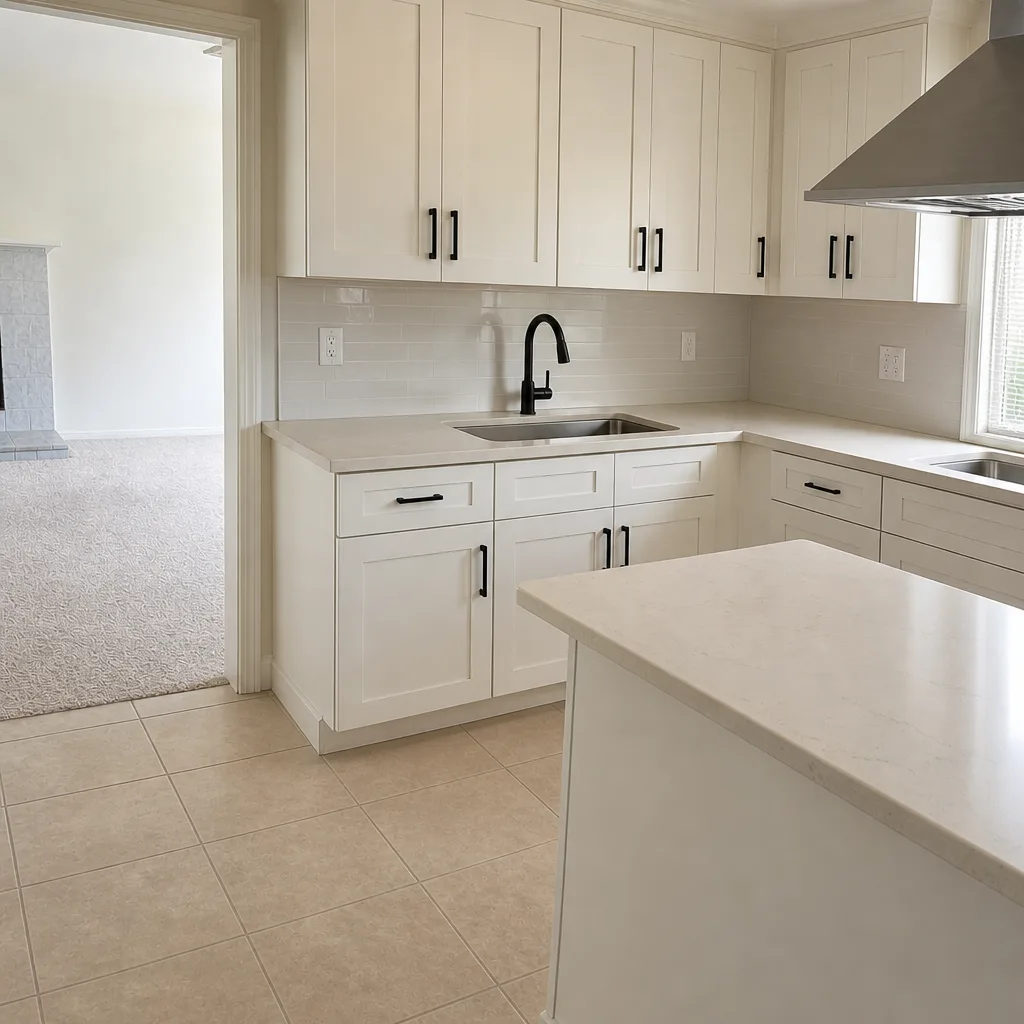 After
 Before
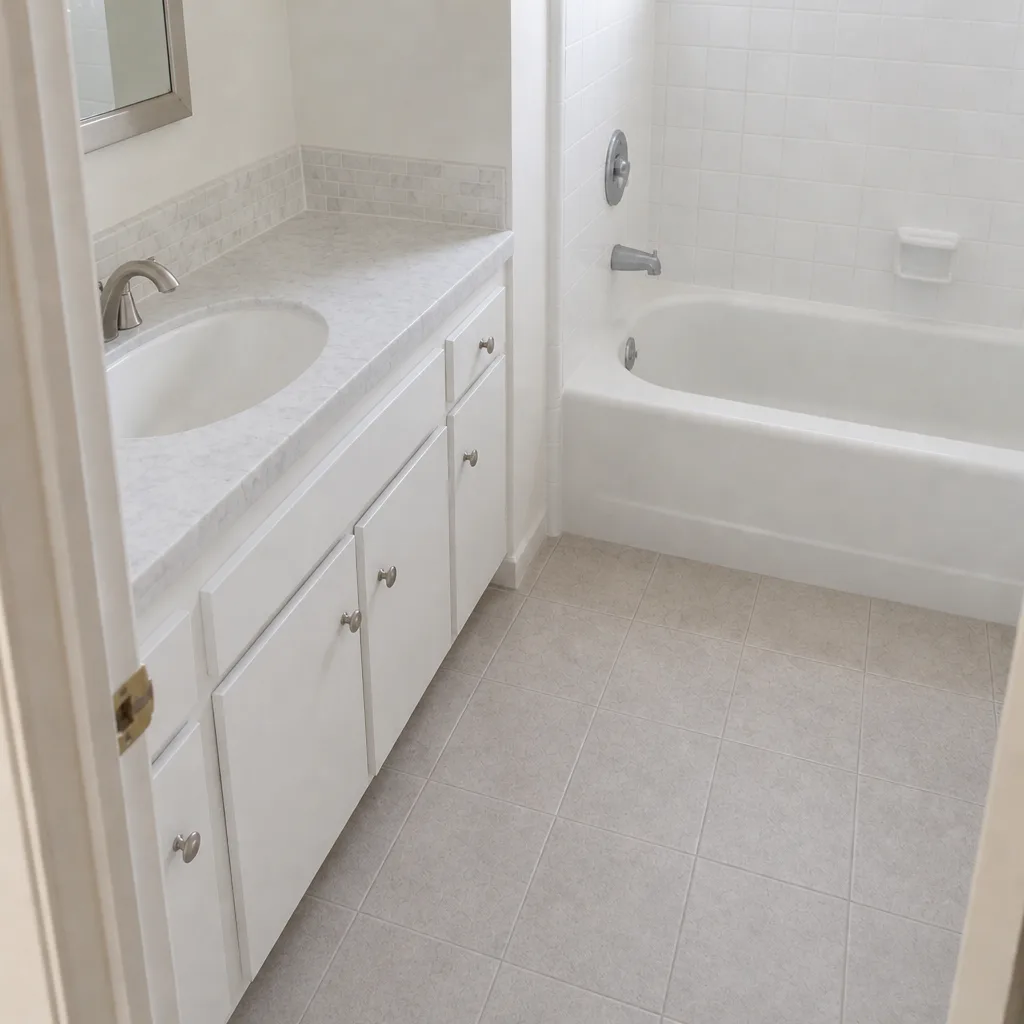 After
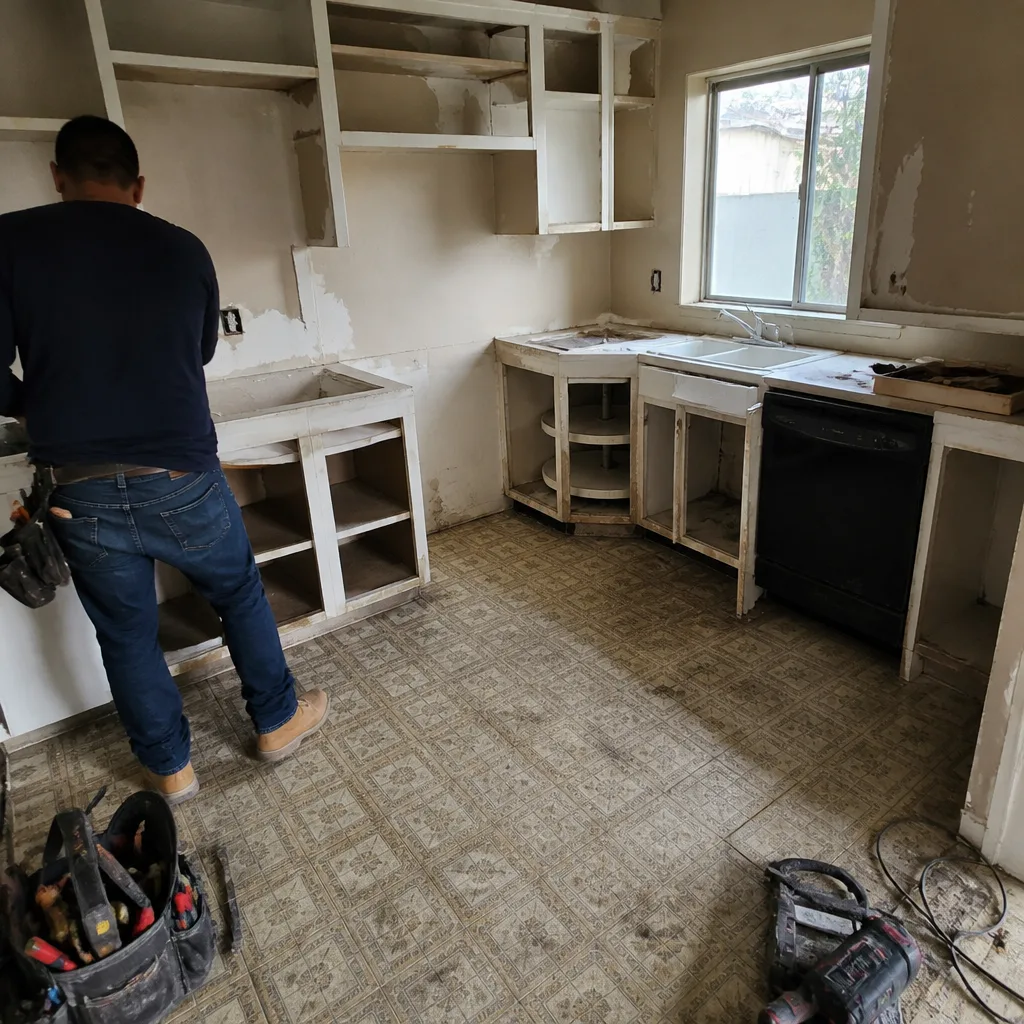 Before
 After
When to Call a Professional
Call a licensed professional the moment the work touches any of the three permit triggers: moving supply or drain lines, adding or relocating electrical circuits, or changing ventilation. That’s not a judgment about your skill – it’s the line where the permit, the inspection, and the insurance coverage live. Call a professional too if you find failed waterproofing behind the tile, corroded supply lines you can’t safely shut off, or a subfloor that’s soft underfoot. And call if the scope has grown past a cosmetic refresh into a full rebuild, because coordinating trades and passing inspections is a job in itself. Bradford Remodeling Co Mission Viejo offers free estimates in Mission Viejo – call (833) 734-2429 to schedule yours. Every estimate comes with a written price before any work starts, and every completed project carries the 365-Day Done Right Promise in writing.
Frequently Asked Questions
Yes, for cosmetic work – painting, tiling, vanity and toilet replacement on existing connections. Anything that moves plumbing supply or drain lines, adds or relocates electrical circuits, or changes ventilation requires a permit and, in practice, a licensed trade. The dividing line is whether you’re changing the building’s systems or just its surfaces.
A standard HO-3 policy can deny or reduce a water damage claim if the loss flows from construction done without required permits or contrary to code. You’d be responsible for both the water damage and the cost to correct the work. Call (833) 734-2429 if you want a permitted scope priced out – estimates are free.
A cosmetic refresh typically lands in the $8,000 to $15,000 range; a full mid-grade remodel runs roughly $25,000 to $45,000; and a high-end rebuild with relocated plumbing and premium surfaces runs higher. The spread depends on whether the plumbing and electrical move. Call (833) 734-2429 for an exact written number – the estimate is free and the price is in writing before work starts.
Not when the scope and price are written down before the job begins. Bradford Remodeling Co Mission Viejo puts the full price in writing before any work starts, so there are no numbers that move at the door. Changes only happen when the homeowner asks for a scope change, and those are quoted in writing before they proceed. Call (833) 734-2429 to schedule your estimate.
Yes. Permitted work is pulled and inspected as part of the job, and the signed inspection cards come to you at close. Unpermitted work is the most common insurance and resale problem we see in Mission Viejo bathrooms, and pulling the permit is how it gets avoided. Call (833) 734-2429 to talk through what your project needs.
Yes, and it’s the hybrid split that works best. You demo and finish-paint; licensed trades do the plumbing and electrical rough-in and pull the permits; the rough-in gets inspected before walls close. Write the split into a contract that names scope by trade, permit responsibility, interface dates, and warranty terms. Call (833) 734-2429 for a free estimate on the licensed portion.
The Bottom Line
The DIY-versus-hire decision isn’t about whether you’re handy. It’s about permit exposure and liability. Tile, paint, vanity swaps, and toilet replacements on existing connections are genuinely safe for a careful homeowner. Moving a drain, adding a circuit, or changing ventilation crosses into permit and insurance territory, and the financial downside – a denied claim or a clouded resale disclosure – runs far past the cost of hiring a licensed trade. The hybrid split lets you keep the safe labor and hand off the risky work. In Mission Viejo, with 1970s to 1990s housing stock and dry-air cure times, prep and waterproofing are where the job is won or lost. Bradford Remodeling Co Mission Viejo gives you the price in writing before work starts and backs the finished bathroom with the 365-Day Done Right Promise. Call (833) 734-2429 to schedule your free estimate.
Written by the team at Bradford Remodeling Co Mission Viejo.