Last updated November 17, 2026





Free written scope consultation - allowances, timeline, and change-order rules on paper before a single trade is scheduled
Construction Emergency Preparedness Guide for Mission Viejo Homes
When a water line fails at 2 a.m. or a Santa Ana wind event peels back a section of roof, the homeowners who move fastest through the contractor call and the insurance claim are almost never the ones with the best-stocked emergency kit. They’re the ones who already had their permit history, structural photos, and shutoff locations documented in a folder. That’s the gap this guide closes. Most Mission Viejo homeowners don’t build that baseline until after their first emergency, and by then the paperwork is scrambled and the evidence is gone. Here’s what to document before anything fails, how to triage a construction emergency when it happens, and what to check after high winds but before the next rain.
Quick Answer
The most effective construction emergency preparedness for a Mission Viejo home is a documented baseline of your home’s structural and mechanical systems – permit history, as-built photos, utility shutoff locations, and material specs – assembled before any failure occurs. When an emergency hits, that documentation is what lets you triage the damage correctly, vet a contractor under pressure, and file a clean insurance claim. A disaster kit matters less than a folder.
Styles & brands we work with
- Kitchen remodeling
- Bathroom remodeling
- Home additions & ADU
- Roofing
- Windows & doors
- Driveway & pavers
- Fence
Table of Contents
- The Home Systems Documentation Package Every Mission Viejo Homeowner Should Have
- Post-Santa Ana Wind Inspection Protocol
- How to Triage a Construction Emergency: Immediate Call vs. Safe Mitigation
- Emergency Contractor Vetting Under Pressure
- Insurance Documentation for Construction Damage Claims in California
- Why Mission Viejo Homes Fail Differently
- Common Mistakes to Avoid
- When to Call a Professional
The Home Systems Documentation Package Every Mission Viejo Homeowner Should Have
The single highest-value thing you can do this month has nothing to do with sandbags. It’s building a documentation package that describes your house as it actually stands. In our experience, when an emergency hits, the homeowner who can hand an adjuster a clean permit trail and dated photos gets a faster, cleaner resolution than the one who’s reconstructing history from memory while water pools on the floor.
Here’s what belongs in the package, and where to keep it (a physical folder plus a cloud copy is the standard):
- Permit history: Every permit pulled on the property going back as far as the city records allow. Mission Viejo has homes built across several decades, and additions, re-roofs, and re-pipes done by previous owners are often invisible until you look them up. This history tells you what’s permitted and what’s the original builder’s work.
- As-built photos: Wide and close shots of the attic framing, roof deck and flashing, exterior walls, electrical panel, water heater, and furnace. Dated. Include a shot of the gas meter and main water shutoff with a piece of tape marked “MAIN.”
- Shutoff locations: Label the main water shutoff, the irrigation shutoff, the gas meter valve, and any interior angle stops under sinks. A photo of each with a one-line note on how to turn it.
- Material specs: The make and model of major components wherever you can find them – window brands such as PGT or CGI, the roof covering, the water heater, the HVAC unit. Specs matter when a claim turns on whether a damaged component matched its permitted install.
- A one-page home summary: Square footage, year built, foundation type, roof age (if known), and any known deferred maintenance. This single page often saves an hour of back-and-forth at claim time.
Building the package once takes a weekend. Rebuilding it during a claim takes weeks. If you’re planning a remodel anyway, your General Contractor in Mission Viejo can help you capture the documentation as part of the project – photos taken mid-construction show framing and rough-in that you’ll never see again once the drywall goes up.
Post-Santa Ana Wind Inspection Protocol
Santa Ana winds are the event most likely to damage a Mission Viejo roof, and the window between the wind dying down and the next rain arriving is your only chance to catch a breach before water gets inside. Run this inspection after any significant wind event, before the first storm, and write down what you find with dates.
- Walk the perimeter and look up. From the ground, scan the roofline for lifted, cracked, or missing shingles or tiles, and for granules collecting in gutters or at downspout outlets. Granule loss is a sign of an aged roof that just took a hit.
- Check the flashing points. Chimneys, skylights, vents, and wall-to-roof transitions are where wind starts the failure. Look for lifted flashing edges and pulled sealant. This is the spot that leaks first when rain follows wind.
- Inspect the attic for daylight and staining. From inside, look for light coming through the roof deck and for fresh water stains or damp insulation. A single bright spot means a breach you can document now and cover before rain.
- Check gutters and downspouts. Wind fills gutters with debris. A full gutter backs water up under the roof edge. Clear them now so the next rain drains.
- Look at windows and doors. Wind stresses frames and seals. Look for cracked glass, popped seals, and daylight at frame edges. Wind-rated windows from brands like ES Windows or CWS are built to take it, but the seal is still worth a look.
- Photograph everything. Date-stamp it. If you cover a breach with a tarp, photograph the breach first, then the tarp. Documentation before repair is what an adjuster needs.
If you find a breach, get it covered to keep water out, then get a professional out to assess. Water intrusion after a wind event is the most common path from a small roof problem to a much larger repair, and catching it in that window is the whole point of the protocol.
How to Triage a Construction Emergency: Immediate Call vs. Safe Mitigation
Not every emergency needs a contractor on the phone in the next ten minutes, but some do, and the cost of getting the call wrong is real. Triage means sorting the situation into two buckets: what you can safely mitigate yourself, and what needs a licensed professional immediately. The test is simple. If the answer involves gas, live electrical, or structural load, you call. Everything else you can usually contain while you wait.
Call immediately – do not attempt mitigation yourself:
- Any gas smell, or a hissing sound near a gas line or the meter. Get everyone out of the house, then call from outside. Do not operate light switches or anything electrical on the way out.
- Sparking, burning smells, or a panel that’s hot to the touch or showing scorch marks. Electrical panels and wiring are not a place for homeowner intervention.
- A roof breach that lets water pour in during a storm, a sagging ceiling, or a cracked or displaced structural member. Structural compromise means load, and load is a professional’s question.
- Water that’s actively rising and won’t stop after you’ve tried the shutoff. A failed supply line behind a wall is a licensed-plumber-and-dry-out situation.
Safe to contain while you arrange help:
- A slow drip from a supply line where you can reach the angle stop and close it.
- A window that cracked but is holding in its frame. Tape it to reduce glass spread and keep the area clear until someone comes out.
- A blocked or overflowing downspout you can clear from the ground with a tool, not a ladder.
When in doubt, err toward the call. A trained professional can tell you in two minutes whether it’s serious. The number to have in your folder is a live one – not a voicemail box that fills up during a storm. A company that answers with a real person around the clock is worth having in your contacts before you need it.
Emergency Contractor Vetting Under Pressure
An emergency is exactly when the wrong contractor finds you, because that’s when you’re not thinking clearly and the pressure is high. The best defense is a pre-emptive list of contractors you’ve already vetted, but if you’re calling cold, two questions do most of the work.
- “Is this a fixed written price, and can I have it in writing before any work starts?” A legitimate contractor will put a number in writing before touching anything. If the answer is verbal, vague, or “we’ll figure it out after we open up the wall,” that’s the moment the price starts moving. Ask for the written price, terms, and scope before you authorize anything.
- “What exactly does your guarantee cover, and for how long?” An emergency repair is still a repair. You want to know whether the work is covered if it fails and for how long. A clear answer with a written guarantee is the difference between a contractor and a handshake.
Beyond those two, check for a license you can verify, proof of insurance, and a clear scope of what’s being done and what’s not. Beware of anyone who won’t put a price in writing, won’t specify what the guarantee covers, or wants to start work before you’ve documented the damage for your claim. The contractor who answers the two questions cleanly is the one to call. Anyone who hedges on both isn’t.
If the emergency repair rolls into a larger project – say a small roof breach reveals an aging roof system, or water damage behind a wall turns into a bathroom rebuild – you’re now in planned-work territory, and the vetting standard goes up. That’s the point to bring in a contractor who puts everything in writing and backs the result with a guarantee you can hold. Bradford Remodeling Co Mission Viejo is held to The Garrison Standard: a written price before any work begins, and the 365-Day Done Right Promise – if the completed work fails within a year, we return and correct it at no charge.
Insurance Documentation for Construction Damage Claims in California
The order in which you document a construction damage claim matters as much as the documentation itself. California insurers want the damage captured before mitigation and repair, and the classic way to weaken your own claim is to clean up and fix things first. Here’s the sequence that protects you.
- Photograph and video before you touch anything. Wide shots for context (showing the room and the damage’s location), then close shots for detail, then the cause. Date and time on every file. Video with your narration is often the most useful single artifact.
- Document the timeline. When did you notice it? What caused it (a storm date, a wind event, a failed line)? What did you do about it? A short dated log of events earns its keep.
- Note what you did not repair. If you covered a breach with a tarp, photograph the breach first, then the tarp. Mitigation to prevent further damage is appropriate, but document what was there before the mitigation.
- Preserve the damaged materials. Don’t haul the ruined drywall or the failed line to the curb until an adjuster has seen it or you’ve been told you can. Keep samples and photograph the removal.
- Keep the paper trail. Letters, texts, and written price estimates from the contractor are all part of the claim file. A written, line-item estimate from a licensed contractor supports the claim and shows the repair is real.
What not to do: don’t sign anything from a contractor who wants to “handle the claim” on your behalf without you understanding what you’re signing, and don’t let anyone proceed with permanent repairs before the adjuster has documented the loss. If your repair is larger than a patch – say the damage now runs into a Kitchen Remodeling in Mission Viejo or bathroom rebuild – keep the claim separate from the remodel conversation, and get everything in writing.
Why Mission Viejo Homes Fail Differently
Mission Viejo isn’t a generic Southern California housing stock, and the failure patterns reflect that. The city’s homes sit across several building eras, from original 1960s and 1970s tracts to 1980s and later infill, and each era carries its own vulnerabilities. Homes from the older tracts are more likely to have aging supply lines, original single-pane windows, and roof systems that have been re-covered at least once. Homes from the 1980s and 1990s have their own issues: the window and door seals age, the roof underlayment reaches the end of its service life, and deferred exterior maintenance shows up first at the south- and west-facing walls that take the most sun.
Add the local climate and the picture sharpens. Mission Viejo sits inland enough to get real summer heat and enough elevation to see frost on winter mornings, and the Santa Ana wind events that come down through the passes put sustained pressure on roofs, windows, and doors. A home near the lake or one of the surrounding hills takes the wind differently than one in the flatter tracts. Homes in the older neighborhoods around the lake tend to have the kind of mature trees that shed branches onto roofs and gutters – a wind event plus a full gutter is a reliable path to a leak.
The practical takeaway is that your documentation package should reflect your home’s era, roof age, and window and door vintage. If your windows are original single-pane units, note that. If your roof is on its second covering, note that. If the last re-pipe was a previous owner’s, note it. These are the facts that matter when you’re deciding whether a storm did real damage or just revealed the age that was already there.
Common Mistakes to Avoid
- Cleaning up before documenting. The most common way to weaken a claim is to sweep up the damaged material before photographing it. Photograph the damage first, mitigate second.
- Authorizing work with no written price. A verbal number in an emergency is not a price, it’s a starting point. Get the written price, scope, and guarantee terms before anyone touches the house.
- Skipping the permit look-up. Mission Viejo homeowners routinely discover a prior owner’s unpermitted addition or re-roof only during an emergency. Know what’s permitted before you need to know.
- Ignoring the post-wind window. Catching a breach after the wind dies down and before the next rain is the cheapest repair you’ll ever make. Skipping the inspection turns a tarp into a dry-out and a dry-out into a remodel.
- Not labeling the shutoffs. A water line fails and nobody in the house knows where the main shutoff is. Label it, photograph it, show every adult in the house.
- Trusting a voicemail in an emergency. The contractor who answers with a live person is the one who can tell you in two minutes whether you have a problem. A voicemail box during a storm is not help.
- Confusing a patch with a repair. A tarp keeps water out; it doesn’t fix the roof. Track the difference between mitigation and repair in your documentation so you don’t lose the claim on a temporary fix.
When to Call a Professional
Call a professional immediately for any gas smell, live electrical issue, active water intrusion you can’t stop, or anything that looks structural – a sagging ceiling, a displaced member, a wall that’s moving. Those are load and safety questions, and they’re not for homeowner troubleshooting. Call for a same-day assessment if a wind event left you with a tarp on the roof, a light showing through the attic, or an insurance claim in the works. And call when the emergency is over and you’re deciding whether the repair is a patch or a rebuild, because that’s where a written price and a written guarantee save you from the second surprise. Bradford Remodeling Co Mission Viejo offers free estimates in Mission Viejo. Call (833) 734-2429 and a live person will answer.
See the difference
 Before
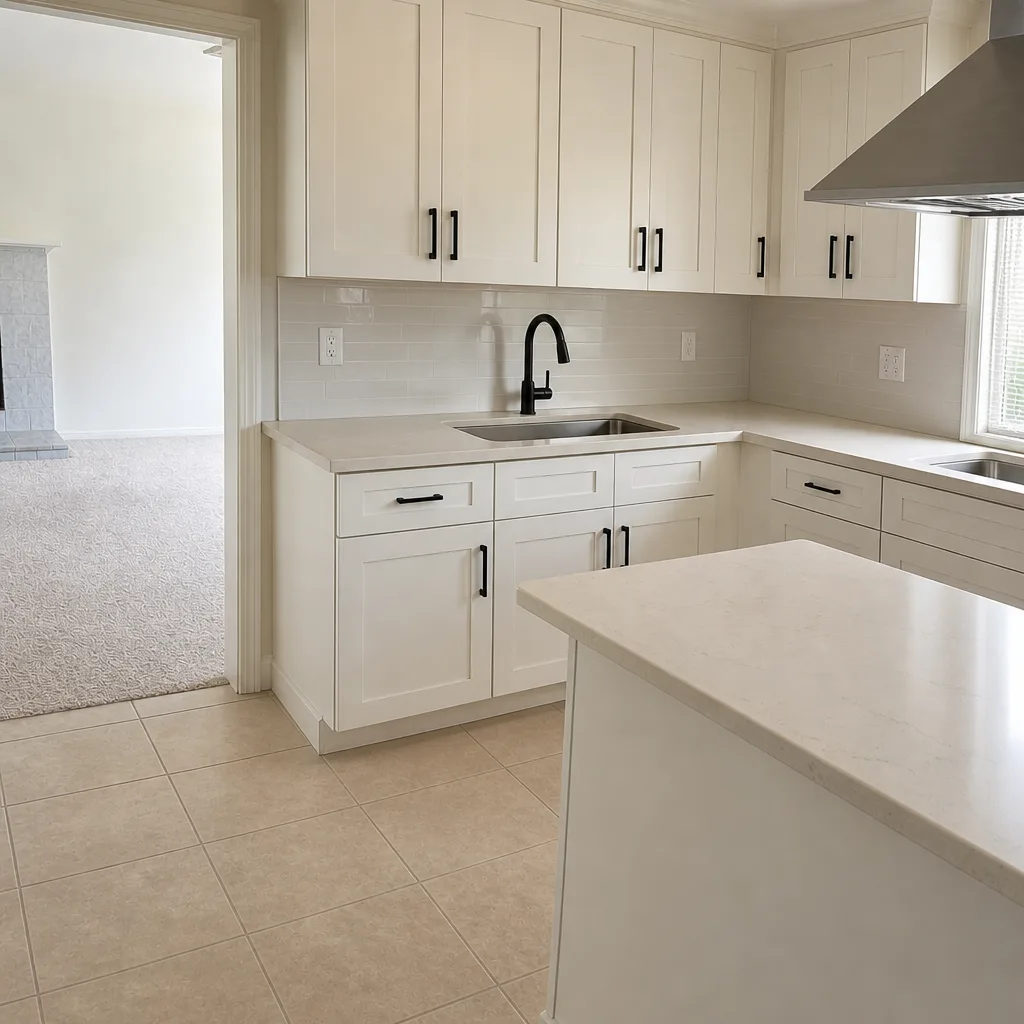 After
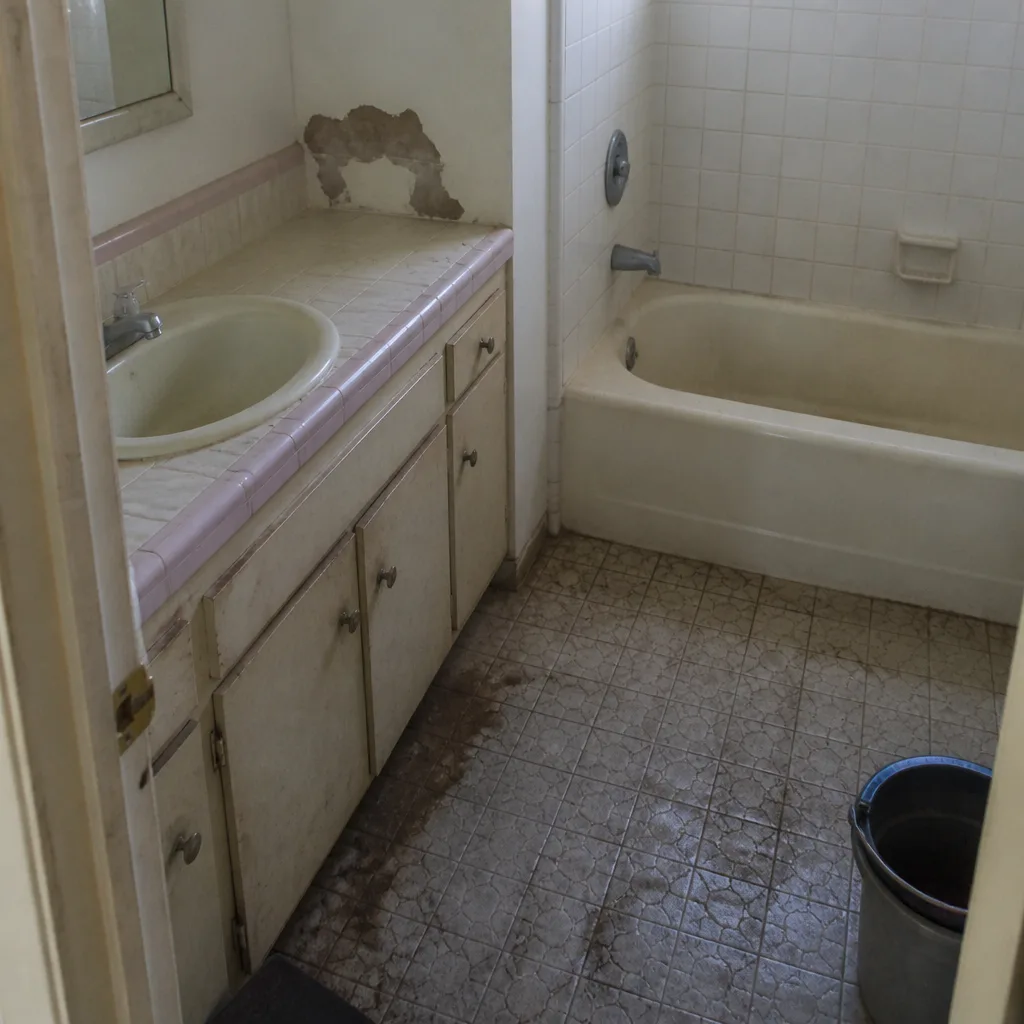 Before
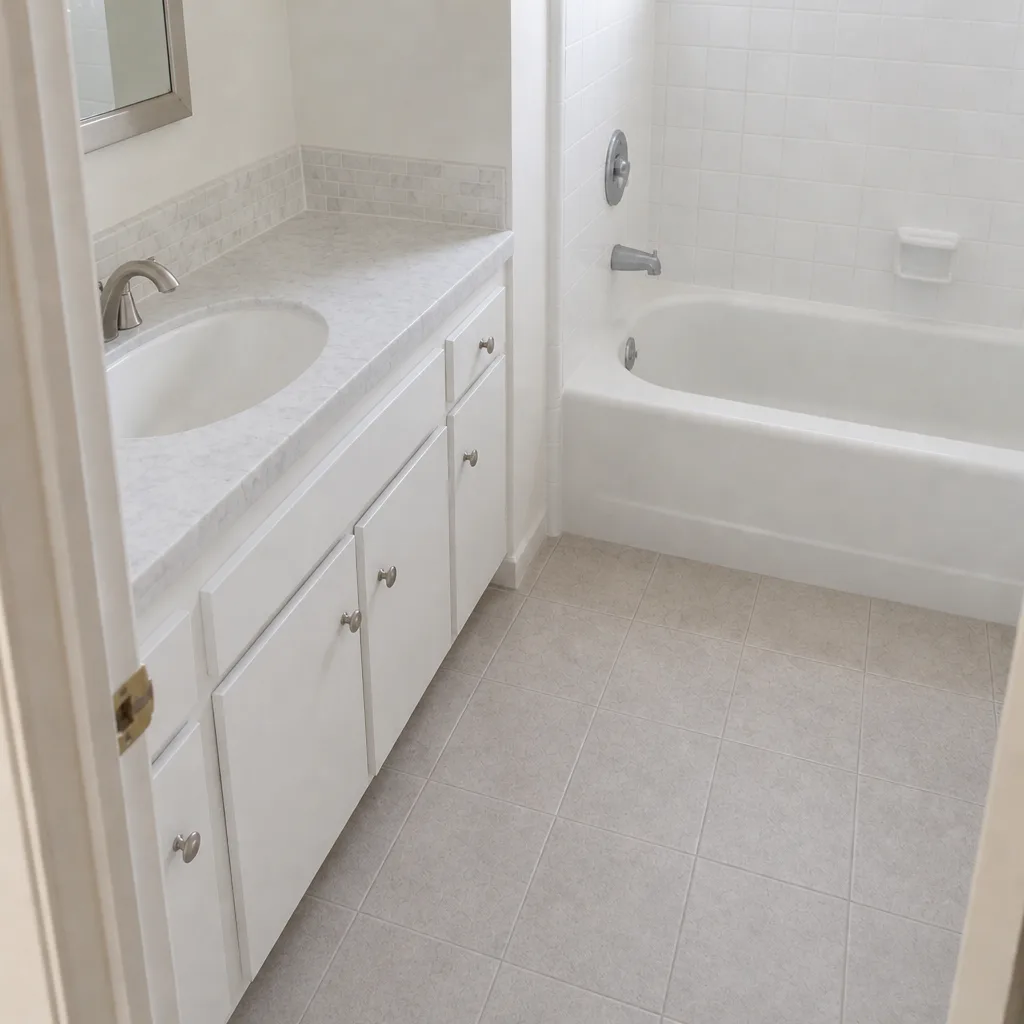 After
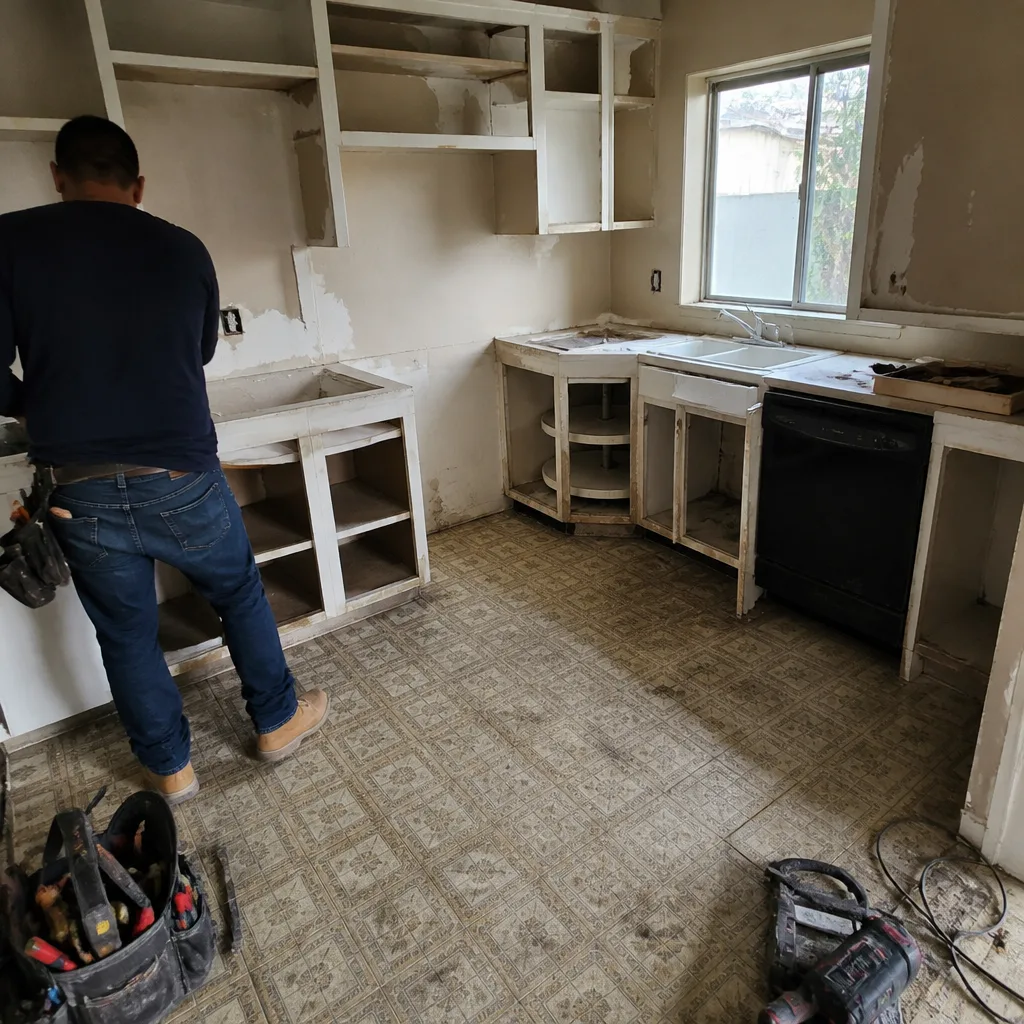 Before
 After
Frequently Asked Questions

At minimum: permit history, dated as-built photos of the attic framing, roof, electrical panel, water heater, and shutoffs, labeled utility shutoff locations, and material specs for major components. Keep a physical copy and a cloud copy. That package is what lets you triage fast and file a clean claim. If you’re planning any work, capture the documentation mid-project while the framing and rough-in are visible. Call (833) 734-2429 for a free estimate on the work itself.
If the answer involves gas, live electrical, or structural load, it’s an emergency – call now. If it’s a slow drip you can shut off, a cracked window holding in its frame, or a blocked downspout, you can contain it safely and arrange help during business hours. When in doubt, call. A live person can tell you in two minutes whether it’s serious. Call (833) 734-2429 for a free estimate.
First: “Is this a fixed written price, and can I have it in writing before any work starts?” Second: “What exactly does your guarantee cover, and for how long?” A legitimate contractor answers both clearly and in writing. Any hesitation on either is your signal to keep calling. Bradford puts a written price in front of you before work begins and backs completed work with the 365-Day Done Right Promise. Call (833) 734-2429 for a free estimate.
Photograph and video before you clean up or repair anything, keep a dated timeline of events, preserve damaged materials until an adjuster has seen them, and keep written communications from the contractor. Don’t proceed with permanent repairs before the adjuster has documented the loss. A written, line-item estimate from a licensed contractor supports the claim. Call (833) 734-2429 for a free estimate.
Often yes – structural repairs, re-roofs, and anything affecting framing, electrical, or plumbing typically require a permit, and the scope determines what’s needed. Emergency protective measures such as tarping are different from the permanent repair, which is where permits come in. Ask before work starts and get the permit question answered up front. Call (833) 734-2429 for a free estimate and we’ll walk through what the repair requires.
Cover it immediately to keep water out, then get it assessed as soon as you can – ideally before the next rain arrives. The gap between wind and rain is your best window. A temporary cover is mitigation, not a repair, and a small breach that takes on water becomes a dry-out and possibly a much larger repair. Call (833) 734-2429 for a free estimate on the permanent fix.
The Bottom Line
Construction emergency preparedness in Mission Viejo is less about the emergency kit on the shelf and more about the folder on the desk. Document your home’s systems before anything fails – permit history, as-built photos, shutoff locations, material specs – and you’ll triage faster, vet a contractor under pressure instead of guessing, and file a claim that holds up. Run the post-wind inspection before the next rain. Get every price and every guarantee in writing. And keep a live-person number handy. That’s the whole game. Call (833) 734-2429 for a free estimate and to see how a Bathroom Remodeling in Mission Viejo project documents the work as it goes.
Contact

Bradford Remodeling Co Mission Viejo is part of the Garrison Partners family, established in 2004, and operates as an independently owned and operated business held to The Garrison Standard. Every project gets a written price before work begins, background-checked and uniformed technicians on the job, and the 365-Day Done Right Promise – if the completed work doesn’t hold within a year, we come back and correct it at no charge. Calls are answered by a live person 24/7, every day. Learn more about our Bradford Remodeling Co Mission Viejo home page, or call (833) 734-2429 for a free estimate.
Written by the team at Bradford Remodeling Co Mission Viejo.