Last updated November 17, 2026








Free written scope consultation - allowances, timeline, and change-order rules on paper before a single trade is scheduled
General Contractor Maintenance Schedule: What to Do and When
Silicone caulk at a shower curb has a functional life of 5-7 years under normal use. Most homeowners replace it after it fails, which is two years after water has already reached the substrate. That gap between “looks fine” and “already leaking” is where repair budgets get blown. We’ve walked into Mission Viejo bathrooms where a $400 recaulk, caught on schedule, would have prevented a $9,000 tile and framing repair. What follows is the maintenance calendar we’d hand a homeowner the day we close out a project: what to check, when to check it, which materials age out on a predictable clock, and which maintenance failures can void the workmanship guarantee you paid for.
Quick Answer
A remodeled home needs a scheduled maintenance pass four times a year, with a deeper annual inspection each spring. Caulk joints should be replaced every 5-7 years, grout sealed every 12-18 months, painted exterior surfaces touched up every 5-7 years, and roof flashing checked twice a year. Skipping these intervals is the most common reason a workmanship guarantee claim gets denied: the defect traces back to neglected maintenance, not the original installation.
Styles & brands we work with
- Kitchen remodeling
- Bathroom remodeling
- Home additions & ADU
- Roofing
- Windows & doors
- Driveway & pavers
- Fence
Table of Contents
- Why the Work a GC Leaves Behind Has an Expiration Date
- The Annual Maintenance Calendar: Four Seasons of Checks
- Kitchen and Bath: The Highest-Stakes Maintenance in the House
- Roof, Flashing, and Exterior Surfaces
- Material-by-Material Service Intervals
- How to Inspect Your Own Work: Flashlight and Moisture Meter
- Documentation That Protects Your Warranty Claim
- What Voids a Workmanship Guarantee
Why the Work a GC Leaves Behind Has an Expiration Date
A finished remodel is not a static object. It’s a stack of materials, each with its own service life ticking down from the day it’s installed. The sealant at a countertop backsplash, the grout at a shower floor, the flashing at a roof-wall intersection, the expansion gap at a hardwood perimeter: none of these were designed to last as long as the house. They were designed to last a specific number of years and then be serviced.
That’s the part homeowners rarely get told at project close. We do tell them, and it’s a big reason our crews stay booked. A kitchen isn’t “done” forever the day the last cabinet door goes on. It’s done for now, and what keeps it done is a maintenance schedule nobody prints on the invoice.
Mission Viejo’s climate makes this more urgent than in most of Southern California. The marine layer pushes humidity against exterior walls and into attic spaces for weeks at a stretch. Then summer heat drives interior moisture into wall cavities and showers. That wet-dry cycling is harder on caulk and paint than steady dry heat. In our experience, exterior caulk joints on the inland side of Mission Viejo age faster than the same joint two miles toward the coast, and a homeowner who inspects only in summer misses the spring moisture damage entirely.
Get the calendar right and a mid-tier remodel holds for twenty years. Get it wrong and you’ll be calling a general contractor in Mission Viejo about water intrusion you could have caught with a $30 moisture meter.
The Annual Maintenance Calendar: Four Seasons of Checks
Here’s the schedule, split by season for Mission Viejo conditions. The work takes about 90 minutes per quarter if you stay on it.
Spring (March-May)
- Walk the exterior perimeter with a flashlight and check every caulk joint at windows, doors, and penetrations. Recaulk anything that’s cracked, shrunk, or peeling.
- Inspect roof flashing at chimneys, skylights, and wall intersections. Look for lifted edges or missing sealant.
- Test all GFCI outlets and reset breakers. Check under every sink for moisture with a paper towel or moisture meter.
- Clear gutters and check that downspouts still discharge away from the foundation.
Summer (June-August)
- Check interior caulk at sinks, tubs, and shower curbs. Heat dries joint compound and can pull caulk away from the tile.
- Inspect painted exterior surfaces for chalking, blistering, or peeling, especially on the south-facing side.
- Run the HVAC system and check the condensate line. A clogged line backs water into the ceiling.
Fall (September-November)
- Inspect the roof before the rainy season. Replace any cracked shingles or lifted flashing sealant.
- Check window and door weatherstripping. If daylight shows through, air and water will too.
- Service the water heater. Flush sediment per manufacturer instructions and check the pressure relief valve.
Winter (December-February)
- Check every caulk joint again. Mission Viejo’s wet season is when water intrusion shows up.
- Inspect attic and crawl space if accessible for moisture, staining, or mold.
- Test smoke and carbon monoxide detectors.
Write these four dates on your calendar now. Recurring tasks that live only in your head don’t get done.
Kitchen and Bath: The Highest-Stakes Maintenance in the House
Water is what makes kitchen and bath maintenance serious. A cracked caulk joint at a shower curb doesn’t just look bad. It lets water into the substrate, the framing, and eventually the room below. Grout, meanwhile, is not waterproof. It’s a decorative wear layer over a waterproofing membrane, and once it cracks, water gets past it.
Here’s what we inspect at the annual pass on kitchen remodeling in Mission Viejo and bathroom work:
- Caulk at wet joints (shower curb, tub rim, sink backsplash, floor transition): inspect every 6 months, replace every 5-7 years. Remove old caulk completely before applying new; caulking over caulk is a waste of time.
- Grout lines: seal every 12-18 months. Test by dropping water on the grout. If it beads, the seal is good. If it soaks in, reseal.
- Shower pan and drain: check for movement or separation at the drain collar. A cracked pan can’t be spotted visually; if you suspect it, call a pro.
- Under-sink P-traps and supply lines: run a paper towel along the pipe joints. Any dampness means a failing gasket or fitting.
- Cabinet hinges and drawer slides: tighten annually, and adjust any door that’s rubbing. Constant friction is what wears out a soft-close hinge.
- Exhaust fan: clean the grille and confirm airflow with a tissue test (hold it to the grille; it should pull away). A weak fan keeps moisture in the bathroom, which shortens every other material’s life.
Our rule of thumb: if it’s a water joint, it gets checked twice a year. Everything else gets checked once. That’s the whole discipline for the wet rooms, and it’s the single biggest money-saver on this page. Get a kitchen or bath spec’d correctly from the start and the maintenance is straightforward. The bathroom remodeling in Mission Viejo page covers what a properly waterproofed assembly looks like before maintenance ever starts.
Roof, Flashing, and Exterior Surfaces
The roof is where maintenance gets deferred most often because it’s out of sight. Flashing is where it actually fails. Flashing is the metal that seals the joint where the roof meets a wall, chimney, or skylight. It’s not visible from the ground, and when it’s compromised, water enters the attic quietly for months before you notice a stain on the ceiling.
Inspect from the ground with binoculars, and never walk a steep roof yourself. Here’s what we look for:
- Roof-wall and roof-chimney flashing: check twice a year. Any lifted edge, missing sealant, or rust means water is getting behind it.
- Asphalt shingles: look for cracked, curled, or missing shingles, especially after any Santa Ana wind event. GAF shingles are rated 20-30 years under normal conditions; in Mission Viejo sun, plan on the shorter end.
- Exterior paint and James Hardie siding: inspect every spring and touch up the south and west sides every 5-7 years. Hardie panels themselves hold 30-plus years, but the caulk joints between them need attention sooner.
- Deck and hardscape: if you have a paver patio from Cambridge Pavers or Techo-Bloc, check joint sand every spring and refill where it has washed out. Re-seal concrete or natural stone every 3-5 years.
- Gutters and fascia: clear twice a year. Clogged gutters back water onto the fascia, and wet fascia means eventually rotted soffit.
Southern California’s wildfire exposure belongs on this list too, but it’s not a maintenance item you handle yourself. If you have a Class A roof or ember-resistant vents, inspect annually for gaps or damage. Fire-hardening is a design issue, not a maintenance one.
Material-by-Material Service Intervals
Here’s the reference table we’d give a homeowner at project close. Treat the years as guidelines; each material’s clock starts at installation and runs whether you inspect or not.
- Silicone caulk: 5-7 years, sooner at exterior joints in direct sun.
- Acrylic caulk: 3-5 years. Interior use only.
- Grout, sealed: reseal every 12-18 months. Grout itself lasts the life of the tile.
- Roof flashing sealant: 5-10 years if it’s a quality polyurethane, sooner if it was installed with silicone on a hot roof deck.
- Painted interior walls: repaint every 7-10 years. Bathrooms and kitchens sooner, 5-7 years.
- Painted exterior: 5-7 years in Southern California sun, with touch-ups yearly.
- Hardwood expansion gaps: check annually for cupping or buckling; gaps shouldn’t close up in summer.
- Mechanical connections (hinges, drawer slides, bath fan mounts, fence post hangers, deck ledger bolts): inspect and tighten every 12-18 months.
- Weatherstripping: 3-5 years.
If you hold to those intervals, you’ll replace a $15 tube of caulk eight times over the life of a shower instead of replacing a shower pan. That’s the math the schedule protects.
Grout and caulk aside, several items on this list are structural connections. Expansion gaps aren’t decorative; they allow the building to move under temperature changes. Failing to check a deck ledger bolt isn’t a cosmetic miss. If you’re not sure what “good” looks like on a structural connection, bring in a trained professional for that item.
How to Inspect Your Own Work: Flashlight and Moisture Meter
You don’t need tools to run most of this inspection. A good flashlight and a $40-60 moisture meter (buy one; a decent one lasts a decade) will cover 80% of the schedule. Here’s the drill:
- Flashlight first. Empty the cabinets under the sinks and the vanity. Shine the light in the back corner and along the supply and drain lines. Look for water staining, bubbling paint, or rust.
- Paper towel test at every plumbing joint. Wipe each joint with a paper towel. Any dampness means a leak, even a slow one. Slow leaks are the ones that rot out cabinet boxes.
- Moisture meter on suspect walls. Hold it flat against the drywall around tubs, sinks, and exterior corners. Read the scale per the manufacturer’s instructions. Anything in the “wet” range means call a pro.
- Push test on caulk and grout. Press the caulk at the shower curb with your thumb. If it flexes away from the tile, it’s failed even if it hasn’t visibly cracked.
- Look at the ceiling and floor below wet areas. A stain on the first-floor ceiling under an upstairs bathroom is the last sign of a slow leak, meaning it’s been leaking for months. Catch the issue from below.
- Document with photos. Photograph each check with your phone and file by date. Two minutes per photo set, and worth every second when you’re filing a claim.
What you shouldn’t do yourself: climb into an attic or onto a roof, mess with gas lines or electrical panels, or attempt structural repairs. Those call for a licensed and insured professional, always. The inspection is the homeowner’s job. The repair is not.
Documentation That Protects Your Warranty Claim
Most workmanship guarantees, ours included, are written to require reasonable maintenance. A defect claim filed 18 months after project completion is only as strong as the paper trail you keep. Here’s the habit worth building:
- Keep the written scope and warranty document in one binder. Every Bradford project comes with both in hand at close. That’s part of Bradford Remodeling Co Mission Viejo home closeout: clean site, documented scope, signed written guarantee in the homeowner’s hand.
- Log your quarterly inspections. A one-page record with date, item inspected, and result takes two minutes. If a claim comes up later, that log shows you held up your end.
- Photograph each inspection. Date-stamped photos of joints, ceilings, and flashing are the evidence that tells the adjuster what happened and when.
- Save receipts for any maintenance work an outside contractor performs. A recaulk job done by someone else is not the original installer’s failure to correct.
- Call the moment you spot an issue, not after you’ve “waited to see if it gets worse.” Water damage compounds hourly.
What Voids a Workmanship Guarantee
Read the guarantee language before you sign, not after a defect surfaces. Most workmanship guarantees cover installation quality, not neglect. Here’s what the standard language usually carves out:
- Failure to perform routine maintenance. If a caulk joint was never replaced and water reached the substrate, the install is fine and the maintenance was the failure.
- Alterations by others. Anyone else touching the work after project close, even a small touch-up, can be the basis for a denied claim.
- Damage from outside causes. Storm damage, fire, earthquake, and pests are typically excluded.
- Failure to follow manufacturer care instructions. Stone counters, natural wood floors, and tile all have specific cleaners. Using the wrong product is on you.
- Improper use. A shower installed as a shower is one thing. Putting a 200-pound object on a floating shelf rated for 50 is another.
Our own 365-Day Done Right Promise runs the other direction on the covered portion: if the work fails within the guarantee period because of installation, we come back and correct it at no charge. That guarantee is written in full on the closeout document, and its terms are simple on purpose. Read yours the day you receive it and you’ll know exactly what’s covered.
If you’re mid-project and haven’t been given a written guarantee, ask for one before the final payment. That document is what makes the maintenance schedule worth keeping.
Common Mistakes to Avoid
- Caulking over old caulk instead of removing it. New sealant won’t bond to a failed joint. The joint fails again in a month, and you’ve wasted the tube.
- Waiting for a visible crack before replacing caulk. By the time a crack shows, the joint has already been letting water in. Replace on the calendar, not on the symptom.
- Skipping the roof flashing inspection because it’s out of sight. Mission Viejo’s wet season is exactly when a missed flashing joint causes the most damage. Inspect in fall, before the rain.
- Using the wrong cleaner on stone or hardwood. Acidic cleaners etch Cambria and Caesarstone surfaces. If you didn’t get the manufacturer care guide, ask for it. It came with the spec sheet.
- Treating mechanical checks as optional. A loose deck ledger bolt or a failing hinge is a small fix now and a structural or safety issue later.
- Not keeping the warranty document. Homeowners who can’t produce the written guarantee find out the hard way that memory isn’t a claim.
- Ignoring the moisture meter reading because “it’s just a little damp.” “A little damp” is what every slow leak looks like six months before the repair bill.
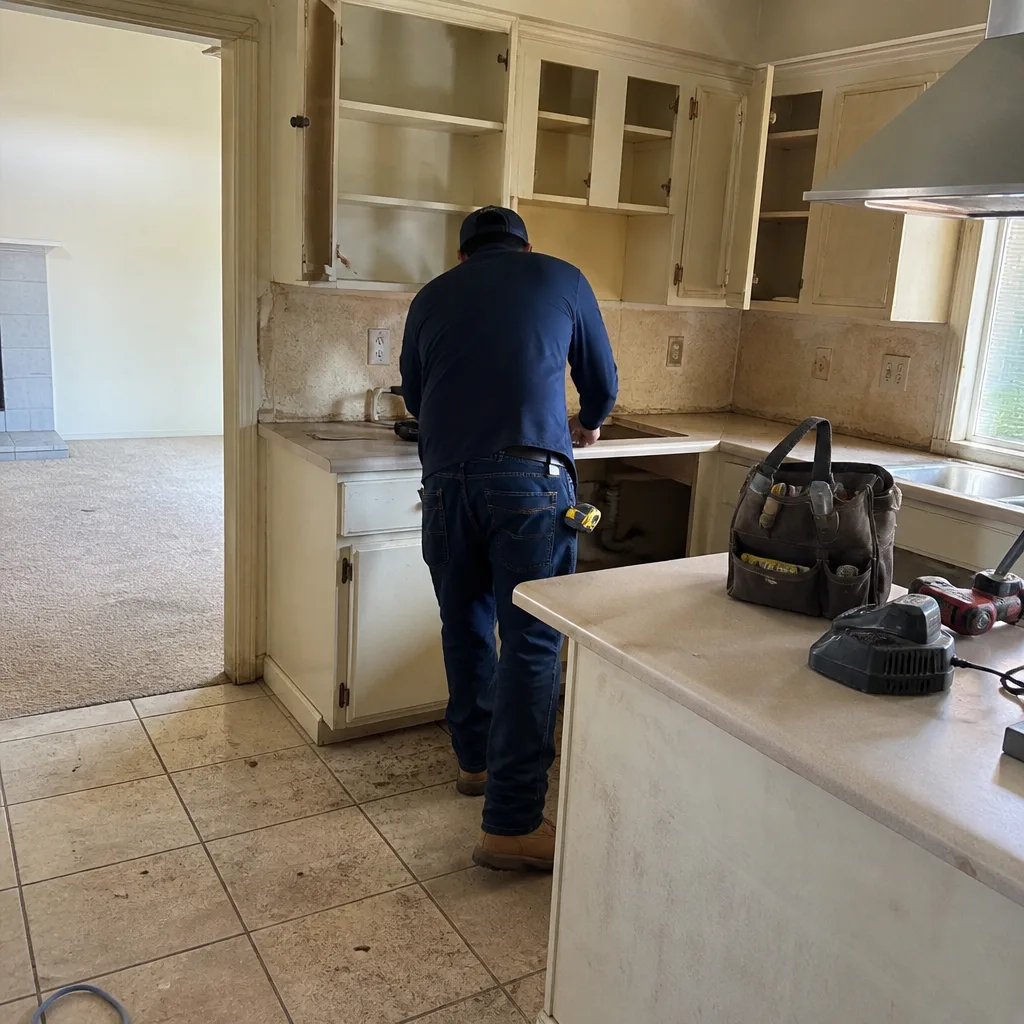
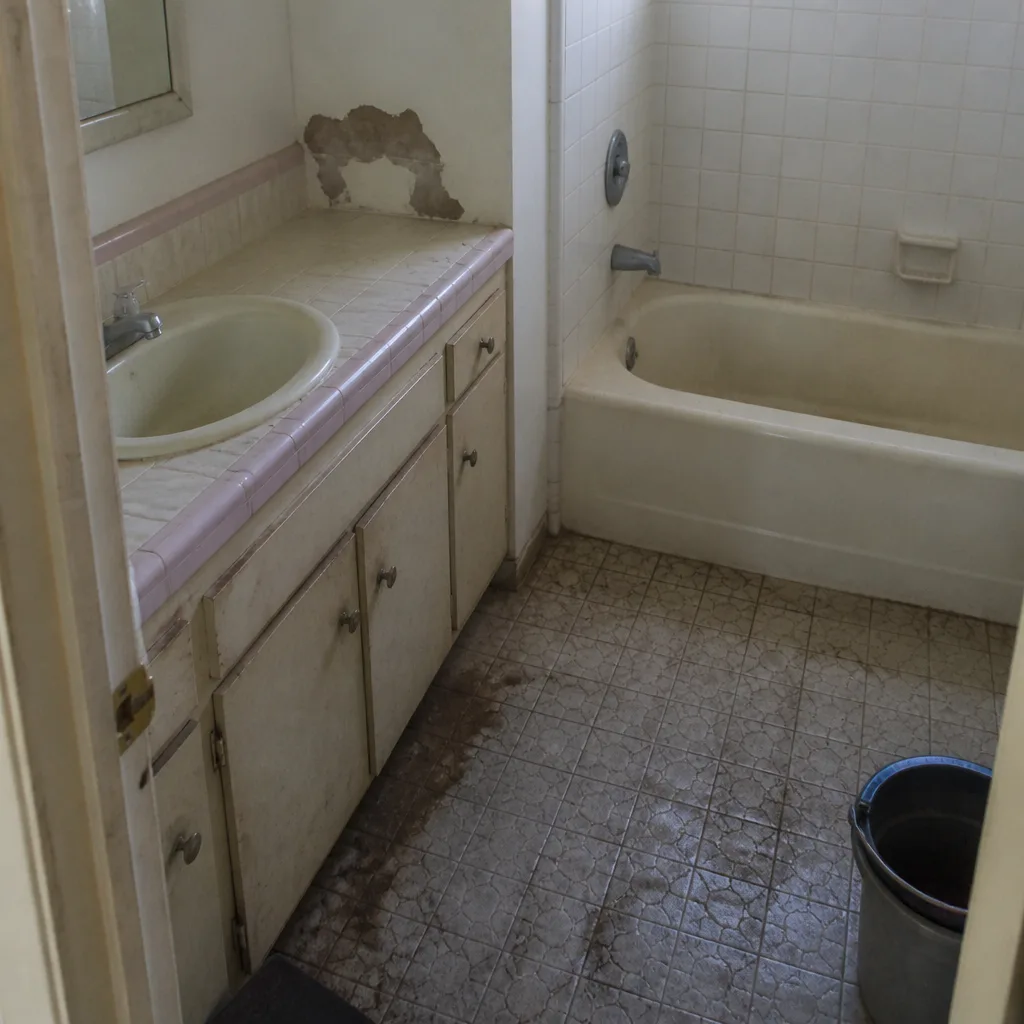
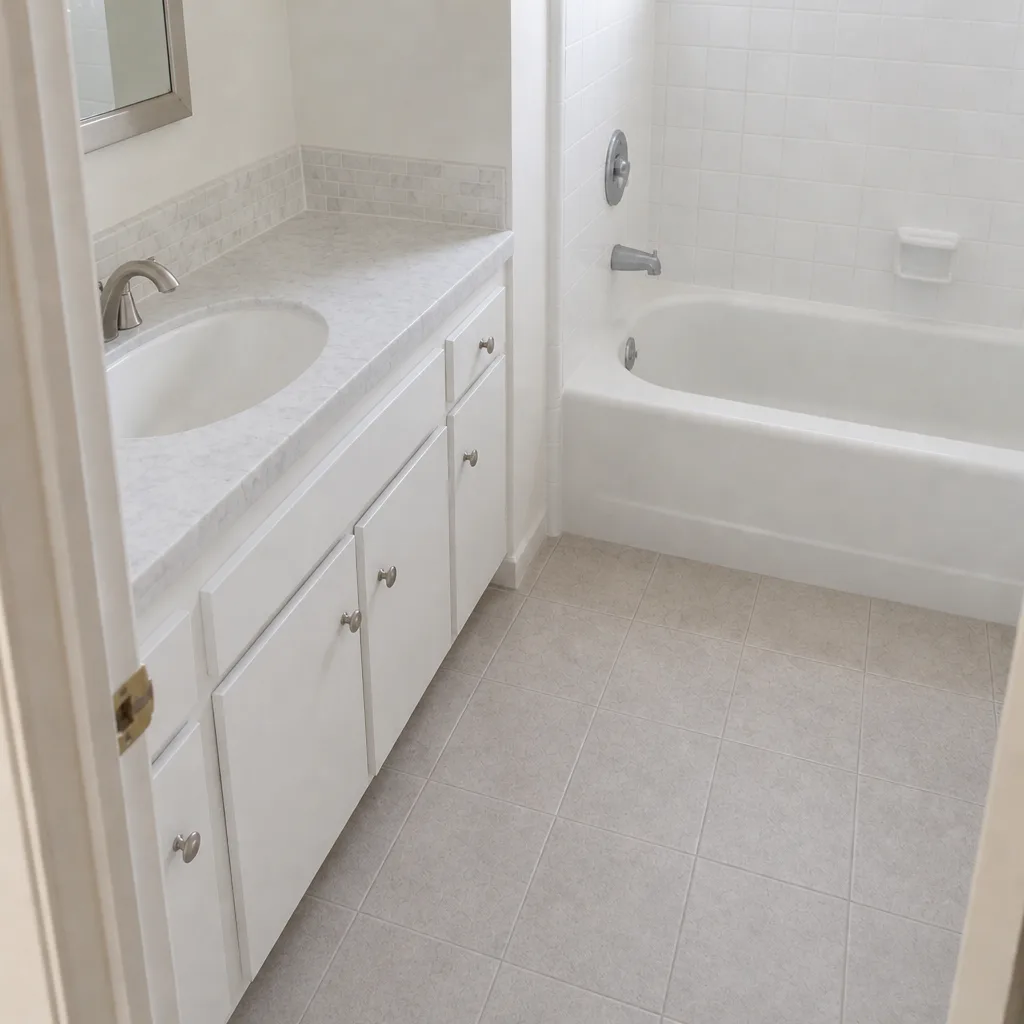
See the difference
 Before
 After
 Before
 After
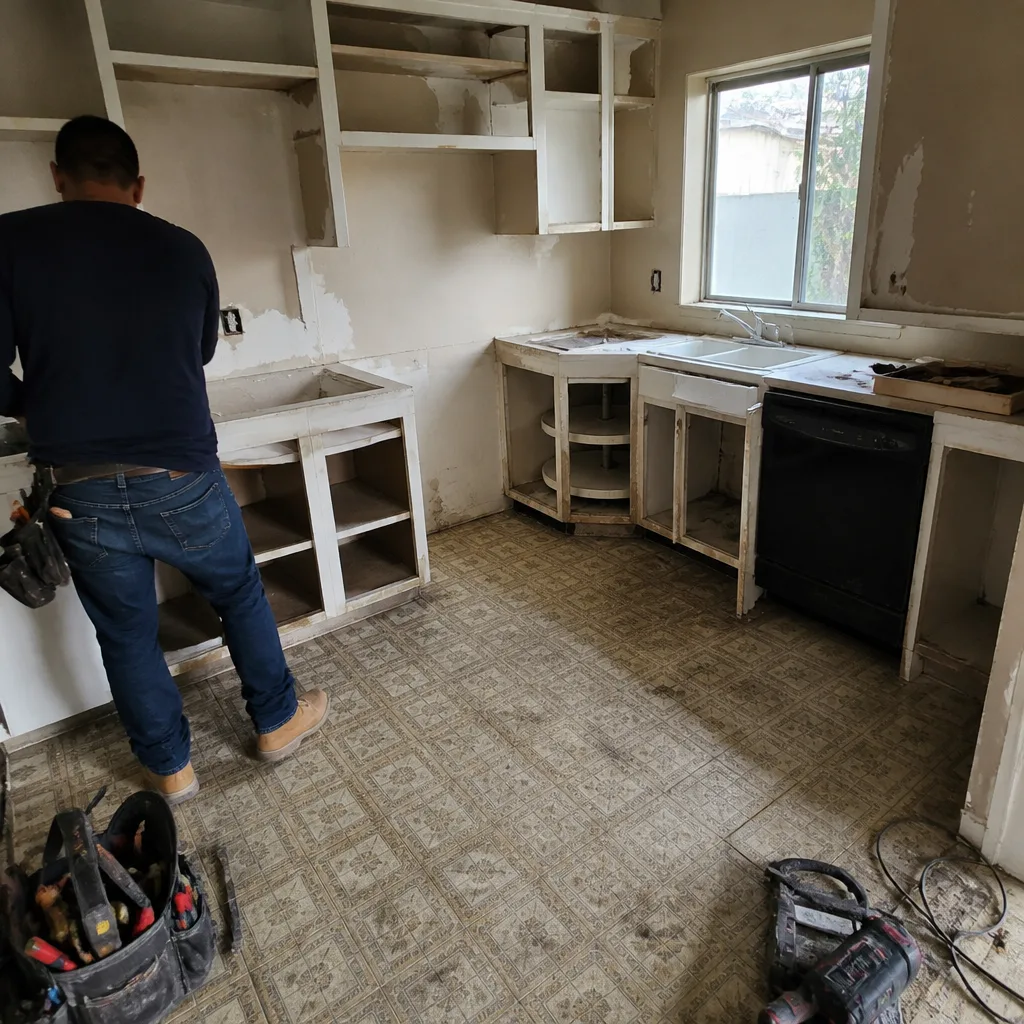 Before
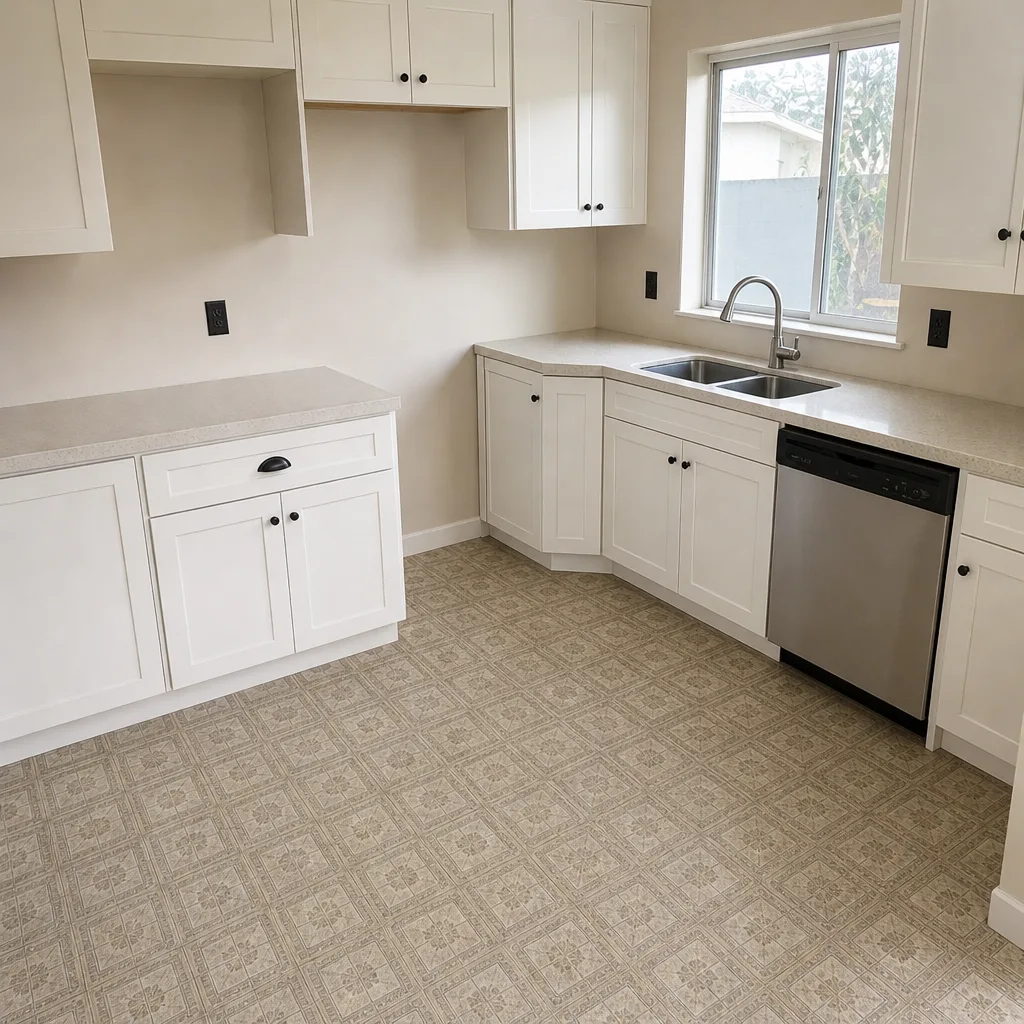 After
When to Call a Professional
Call a pro for anything that touches structure, gas, electrical, or the building envelope. Specific triggers: any moisture meter reading in the “wet” range; a stain on a ceiling or a bubbling wall surface; caulk that won’t bond after two replacement attempts (indicating water behind the substrate); a shower pan or drain that moves underfoot; a roof leak of any size; a shower or tub that pulls away from the tile wall; and any mechanical connection on a deck, fence, or structural framing that you’re not sure is sound.
Bradford Remodeling Co Mission Viejo offers free estimates in Mission Viejo – call (833) 734-2429. We’ll inspect the issue, tell you in plain language what failed and why, and give you a written price before any work starts. Our technicians have up to 22 years of experience, and we’re part of the Garrison Partners family, each location independently owned and operated and held to The Garrison Standard.
Frequently Asked Questions

Recaulk the shower curb, tub rim, and vertical corners every 5-7 years, and inspect every 6 months. Mission Viejo’s wet season accelerates sealant wear, so check before the first fall rain. Call (833) 734-2429 for a free estimate if you’re not sure the joint is still holding.
No. Vinegar is acidic and etches both grout and natural stone, and on a Cambria or Caesarstone surface it can dull the finish. Use a pH-neutral stone-safe tile cleaner, which is what you should have received with the care guide at project close.
It can, yes. Most written guarantees, including our 365-Day Done Right Promise, cover installation defects, not neglected maintenance. If a caulk joint was never serviced and water reached the substrate, that’s a maintenance failure, not an install failure. The guarantee document spells out the distinction precisely. Read it at closeout.
Water intrusion at every wet joint, first. Run a paper towel along all plumbing supply and drain lines under sinks, then press-test the caulk at every tub, shower, and sink. Water is what does the most expensive damage in the least time. Whole-home remodels with more wet rooms mean more joints to check. If you’re considering a whole-home project, the general contractor service page covers what the schedule looks like after closeout.
Look from the ground with binoculars for lifted metal edges, missing sealant, or rust at the joint where the roof meets a wall or chimney. Never walk the roof yourself. If you see or suspect a breach, call a pro for an inspection before the rainy season. Roof work is not a DIY item, ever.
Every completed project comes with the 365-Day Done Right Promise: a written guarantee that if the work fails inside the year because of installation, we return and correct it at no charge. That’s on top of the written price before any work starts. Call (833) 734-2429 to schedule a free estimate, and we’ll walk you through the guarantee terms line by line before you sign anything.
The Bottom Line
A remodeled home is maintained material, not finished material. The caulk, grout, flashing, and paint that a contractor installs at project close have predictable service lives, and the calendar above is the difference between replacing a joint and replacing the structure behind it. Run a quarterly check, keep photographs, log your inspections, and read your written guarantee the day you receive it. If you hold the schedule, the work holds for years. If you don’t, the warranty usually won’t rescue you. Bradford Remodeling Co Mission Viejo is here when the schedule catches something serious; call (833) 734-2429 and we’ll give you the price in writing before any work starts.
Written by the team at Bradford Remodeling Co Mission Viejo.