


Home Remodeling: Repair or Replace? How Mission Viejo Homeowners Decide
The repair-or-replace question usually gets framed as a money question, and that’s the first mistake. It’s a scope-of-work question. A repair restores function to a system that still has service life left in it; a replacement resets the clock. When a Mission Viejo homeowner gets that distinction wrong, they either pay for a patch that fails in two years or buy a new kitchen they didn’t need. If you’d rather have someone walk the house and put the answer in writing, call (833) 734-2429.
Here’s the pattern we see. A contractor walks in, taps a cabinet box, looks at the countertop, and says “replace” before anyone has measured anything or put a single note on paper. That’s not a diagnosis. It’s a sales call with a tape measure in its pocket.
What’s the first thing to check before deciding to repair or replace?
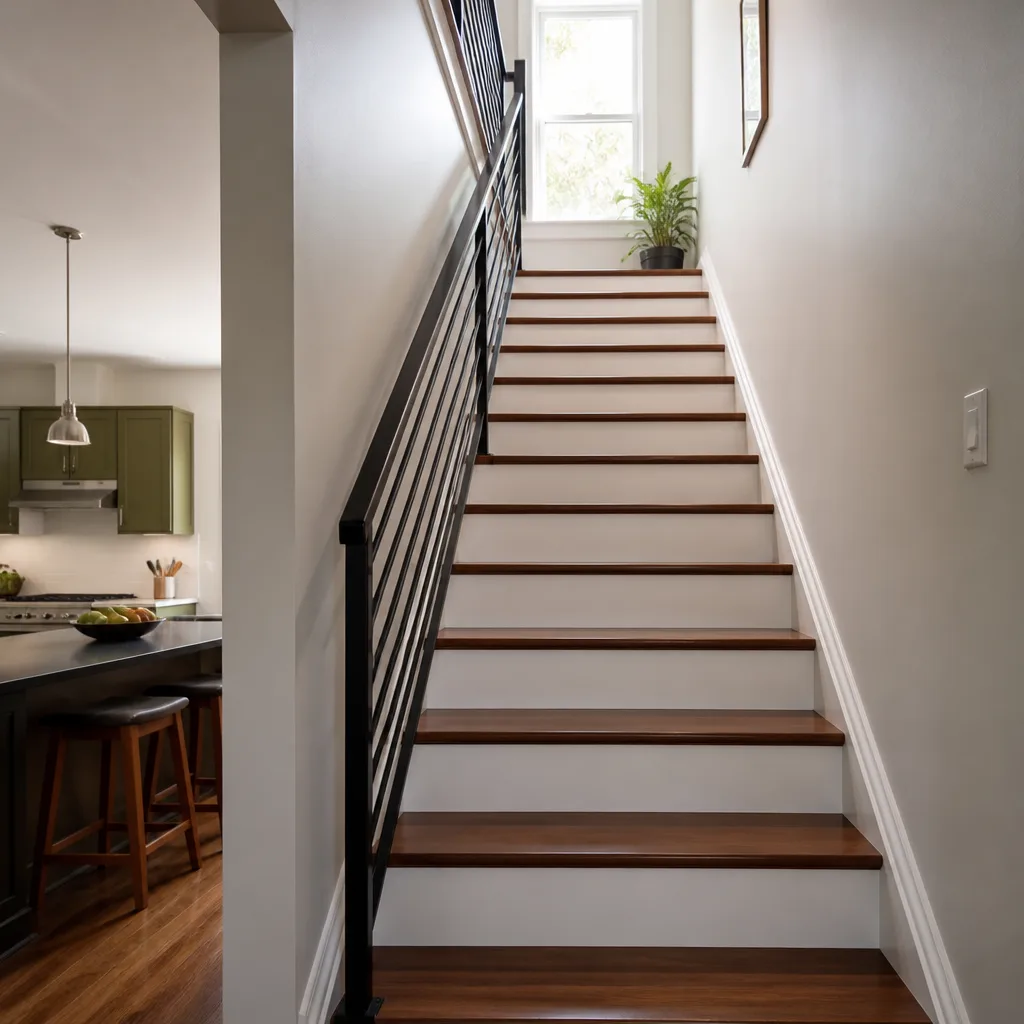
Get an assessment of the existing structure before anyone quotes a scope. Not a verbal opinion, an actual written assessment: photos of the failure points, measurements, and notes on material condition. In California, a recommendation to replace should come with a written explanation of why repair won’t hold. If a contractor can’t produce that, you’re hearing a revenue position, not a professional one.
A legitimate assessment document for a Mission Viejo home typically includes:
- Photographs of the failed component, not stock images. The soggy subfloor under the sink, the grout line that’s cracking the length of the shower pan, the cabinet box that’s swelled at the toe kick.
- Measurements. Out-of-square walls, floor deflection, moisture readings at the substrate.
- Material condition notes. What the existing system is made of, and whether it’s still serviceable.
- Remaining service life, stated as a range in years, with the reasoning behind it.
What you’re looking for on that page is judgment, not adjectives. “This 1988 vanity cabinet has water damage along the bottom six inches and the box is particleboard, so a patch will re-swell the first wet season” tells you something. “This is old and worn” doesn’t. Our technicians have up to 22 years of experience walking exactly this line, and the difference between a documented assessment and a verbal one is usually the difference between a repair that holds and one that doesn’t.
How do you apply the three-part test to a repair-or-replace decision?
Run every repair-or-replace call through three questions, in this order. The answer that survives all three is your decision.
- Remaining service life. How many years does the existing system have left if you repair it, and how many if you replace it? A cabinet door that’s come off its hinge has decades left. A shower pan with a cracked liner has none, no matter how good the patch looks.
- Cost delta at current labor rates. What’s the repair, and what’s the replacement, priced line by line? Not a ballpark, two written bids. Labor is the expensive half of any job in Mission Viejo, so the repair number is often higher than homeowners guess once you account for the time to tear out the failed piece and rebuild it.
- Root cause or symptom? Does the repair address why the thing failed, or just what failed? A dripping Moen cartridge is a symptom of a worn cartridge. Water staining on the ceiling below a bathroom is a symptom of a failed pan liner or supply line, and replacing the drywall fixes nothing.
If the repair clears all three, repair it and put the savings somewhere that matters. If it fails question three, replacement is the only defensible call, because you’d be paying twice: once for the patch, once for the replacement you delayed.
Why does the 50% rule hold up, and when does it mislead?

If a repair costs more than half of what replacement costs and doesn’t restore full service life, replace. That threshold is the trade’s working line because below it, the repair buys you real years at reasonable cost, and above it you’re buying a diminishing return on a system you’ll replace anyway.
The number only means something if it comes from written bids. Two line-item quotes, one for the repair and one for the replacement, with the same scope defined on both. A verbal estimate of “about four thousand” for the repair against a replacement quote of “somewhere in the eighteens” isn’t a comparison, it’s a coin flip. Get the paper first.
Where the rule misleads is when the repair quote quietly excludes the work the failure will trigger. A tile repair in a Mission Viejo shower that doesn’t count the backer board replacement underneath isn’t half the cost of a new shower, it’s half the cost of a repair that will fail inside a year. Read the scope, not the total. If the line-item list on the repair bid is missing a step that a contractor with real experience would expect to find, don’t count that bid.
What Mission Viejo-specific factors push the math toward replacement?
Mission Viejo’s housing stock changes the arithmetic in ways that a contractor who works mostly in newer construction will miss. Three local factors come up on nearly every assessment.
Original construction dates. A large share of Mission Viejo tracts went up between the late 1970s and the 1990s. That puts a lot of kitchens, bathrooms, and flooring at thirty to forty-five years old. Systems installed then have largely run out their service life, and the decision shifts from “can this be repaired” to “is it worth repairing at all.”
Expansive soil. Mission Viejo sits on clay soils that swell and shrink with seasonal moisture. Over decades that movement shows up as hairline cracks in slabs, out-of-square door openings, and foundations that have shifted a fraction of an inch in the wrong direction. A repair bid that ignores the slab under a failing floor is bidding on the wrong problem. If a door has stopped latching, look at the framing and the foundation before you authorize a new door.
Discontinued builder-grade materials. The original mass-produced cabinet lines, tile, and fixtures in these homes are long out of production. Matching a failed piece is often impossible, and a partial replacement leaves you with a patchwork that never quite lines up. That’s a genuine reason to replace rather than repair, and it’s one a lot of homeowners don’t hear until they’ve already authorized a repair.
We pulled a cabinet out of a garage over in Mission Viejo last month where a homeowner had paid for two rounds of repair on a particleboard box that had swelled from a slow leak. The second repair cost more than the cabinet was worth. Hindsight is easy, but the assessment would have caught it the first time.
How should you read a contractor’s written assessment?

A written assessment should tell you what’s there, what condition it’s in, and what happens if you repair versus replace, without a recommendation until the last page. If the recommendation comes first, the rest is justification.
Look for these elements, and ask for them if they’re missing:
- Photos with locations noted, so you can match the image to the spot in your home.
- Material callouts, including brand and product where it’s visible or documented, and the measured condition of each.
- Measured dimensions where sizing will affect the scope.
- A stated remaining-service-life estimate for each system, with the reasoning behind it.
- Two scopes, repair and replace, priced line by line, with the exclusions clearly marked.
What you don’t want: a one-line recommendation, a range instead of a price, a verbal “we’ll figure out the details once we’re in there,” or a number that changes once the work starts. Under The Garrison Standard, we put the price in writing before any work starts and the numbers don’t move at the door. That’s the same discipline we apply to the assessment itself, because the assessment is what the price is built on.
When should you call a pro instead of deciding yourself?
Call a professional when the decision touches structure, water management, or anything you’d have to open a wall to inspect. A homeowner can reasonably judge a cabinet door, a faucet cartridge, or a tile grout line. A homeowner should not make the call on a foundation crack pattern, a moisture problem behind tile, or a load-bearing change, and no honest assessment would ask you to.
Two rules we’d give anyone in Mission Viejo deciding this on their own: don’t sign anything until you’ve seen a written assessment, and don’t accept a recommendation to replace that doesn’t explain why repair won’t hold. Both are reasonable requests, and a disciplined contractor will hand them over without being asked.
Related services in Mission Viejo: if the assessment points toward the kitchen or a bathroom, the Kitchen Remodeling in Mission Viejo and Bathroom Remodeling in Mission Viejo pages cover scope and timeline. For structural questions or whole-home work, start with the General Contractor in Mission Viejo page.
The Bottom Line
Repair-or-replace is a scope decision, and the scope is what tells you which direction to go. Run the three-part test: remaining service life, cost delta from written bids, root cause versus symptom. Apply the 50% rule with real numbers in hand. Read the assessment before the recommendation, and expect it in writing. Mission Viejo’s construction dates, expansive soil, and discontinued builder materials tilt a lot of these decisions toward replacement, but not all of them, and the only way to know is to have the existing structure documented first.
If you’re in Mission Viejo and need help, Bradford Remodeling Co Mission Viejo offers free estimates, written line-item pricing before any work starts, background-checked and uniformed technicians on every job, and a live person answering the phone around the clock. Every completed project carries the 365-Day Done Right Promise: if it’s not done right, we make it right, and if the work fails within a full year, we return and correct it at no charge. Call (833) 734-2429 to schedule your free estimate.
You can also start at the Bradford Remodeling Co Mission Viejo home page to see what we take on.
Frequently Asked Questions
The assessment itself should be free, and the question you’re really asking is what the two paths cost. A line-item repair bid on a failing bathroom or kitchen component typically runs well under the cost of full replacement, so the assessment is cheap compared to guessing. Get two written bids, one for repair and one for replacement, and compare those. Call (833) 734-2429 for a free estimate with a written price before any work starts.
It should not. A written, line-item price is the whole point of an assessment, and a contractor who reopens the number after the drywall comes down was guessing when they quoted. Fix the scope on paper first. Under The Garrison Standard, the price is written before any tool comes out and doesn’t move at the door. Call (833) 734-2429 to schedule a free estimate.
Most structural, electrical, plumbing, and mechanical changes require a permit, and replacement work that touches any of those systems generally does. The scope document should state which permits apply before work begins. Ask for that up front, and expect the inspection record to be part of the closeout. Call (833) 734-2429 with your project scope and we’ll tell you what applies.
A proper assessment takes a single visit, and the written scope with pricing usually follows within days. The construction timeline depends entirely on which path you choose and how much is being replaced. A disciplined contractor gives you both timelines in the written scope: the repair path and the replacement path, priced separately. Call (833) 734-2429 for a free estimate.
Written by the team at Bradford Remodeling Co Mission Viejo.
Need Construction Help?
Call Bradford Remodeling Co Mission Viejo - licensed & insured, here with fast after-hours help in Mission Viejo.
(833) 734-2429