
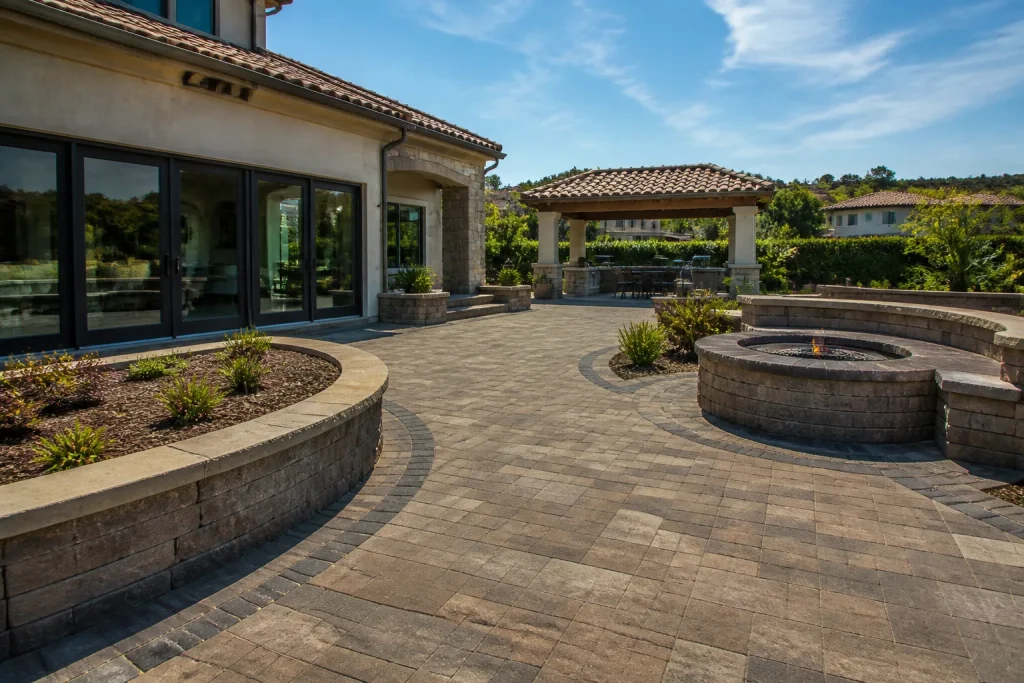
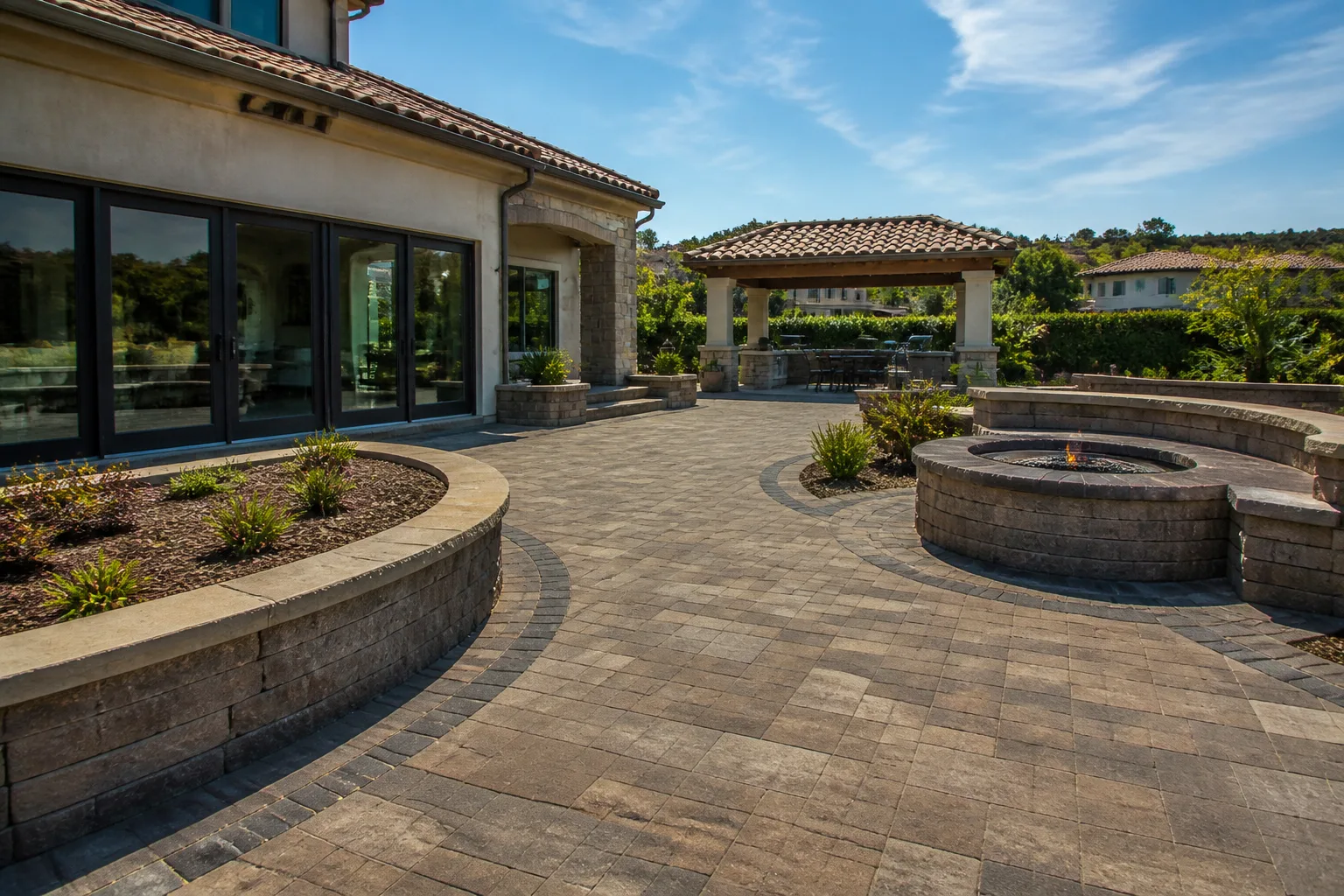
Cambridge Pavers General Contractor in Mission Viejo: A Homeowner’s Guide
Cambridge Pavers’ catalog runs over 60 product lines. The question isn’t which pattern you like best. It’s which thickness and load rating your driveway or patio actually requires, because choosing style before spec is how you end up with a beautiful surface that cracks under an SUV. Mission Viejo homeowners overpay for Cambridge work every year for exactly this reason: they let a contractor pick the product category before locking in the installation spec. This guide reverses that sequence.
Why the Cambridge Catalog Order of Operations Matters in Mission Viejo
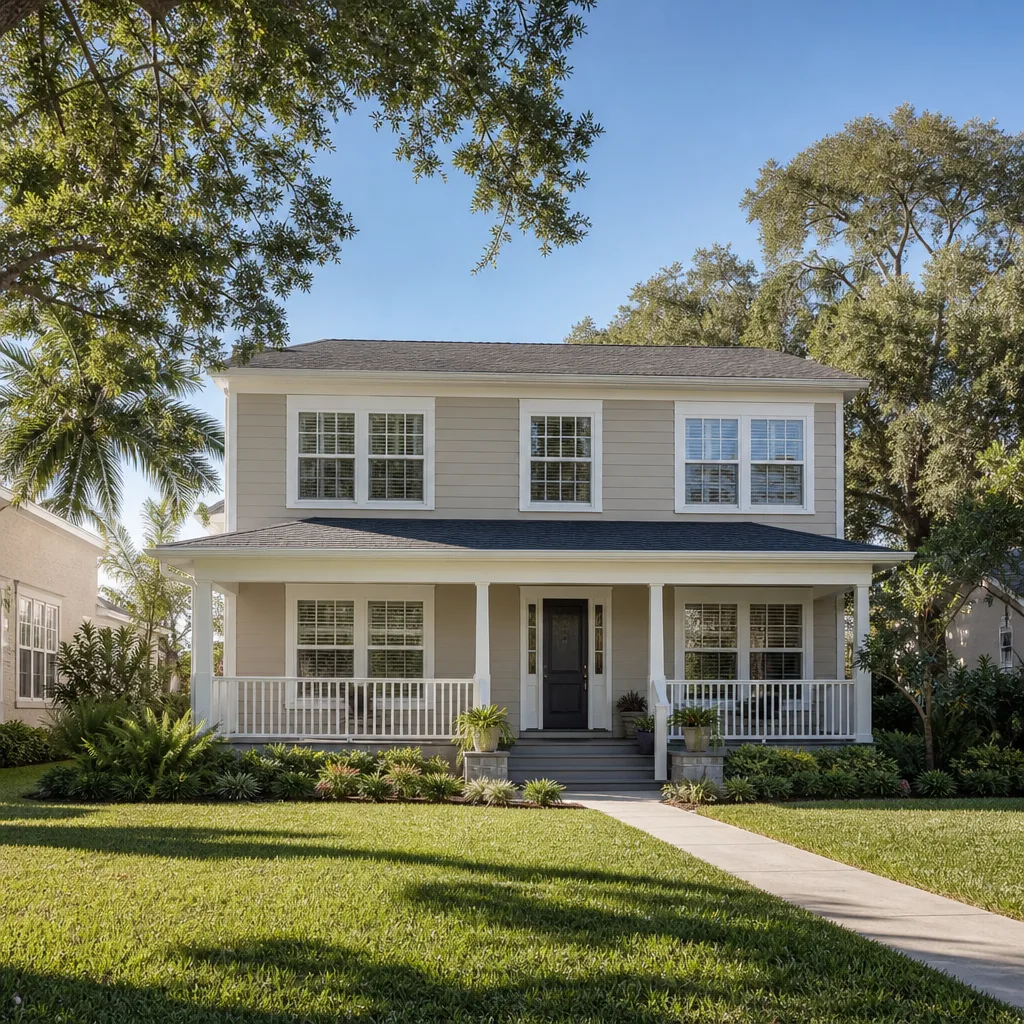
The standard mistake looks like this. A homeowner scrolls Cambridge’s website, falls for a Ledgestone or a Tribeca Cobble look, screenshots it, and hands it to whoever shows up first. That contractor then selects a product based on what’s in stock or what’s easiest to lay, not on what the surface will carry.
The correct order is spec first, style second. Product category (standard vs. commercial-grade) gets decided by load and substrate. Then, and only then, do you choose color, texture, and pattern from Cambridge’s catalog. Homeowners who flip that order end up rebuilding base course at their own expense, or replacing cracking pavers inside two summers.
In our experience across South Orange County, we’ve watched this play out most often on driveway replacements near Lake Mission Viejo and the older tracts off La Paz Road, where garages are deep, driveways are long, and trucks pull in every day.
Key takeaways:
- Lock the thickness and base spec before you pick a style.
- Cambridge standard vs. commercial-grade is a load decision, not a budget decision.
- HOA architectural review in Mission Viejo gates your color options, so verify before ordering.
- The written contract must name product line, thickness, color batch, and base spec.
Standard vs. Commercial-Grade Cambridge Pavers: Which Thickness Does a Mission Viejo Driveway Need?
Cambridge Pavers sells two primary thickness families: standard pavers at roughly 2 3/8 inches, and commercial-grade at roughly 3 1/8 inches. That three-quarter-inch difference is the whole ballgame for a driveway.
Here’s the plain version. Standard-thickness pavers are fine for patios, walkways, and areas that see foot traffic and the occasional wheelbarrow. Commercial-grade pavers carry the load of a vehicle turned over them repeatedly, day after day, including the torque load from a stopped rear-wheel-drive truck on a slope. For a Mission Viejo driveway that will hold two cars and a pickup, the answer is commercial-grade. Full stop.
Where this gets muddy is patios and motor-court-style driveways where a contractor will quote “standard” to hold the price down. That’s not dishonesty by default, but it’s a decision the homeowner should make knowingly, not inherit.
- Patio, walkway, pool deck: standard thickness, 2 3/8 in. is typically correct.
- Driveway, motor court, RV pad: commercial-grade, 3 1/8 in. is the correct baseline.
- Heavy slope or tight turn radius: commercial-grade plus a deeper base course.
- Pedestrian-only hardscape with vehicle-over potential: default to commercial-grade.
Any contractor who quotes “Cambridge pavers” without naming the thickness line has left the most important spec blank. Call them back on it.
How Mission Viejo HOA Architectural Guidelines Interact With Cambridge’s Color and Texture Options
Mission Viejo has more than a dozen active HOA architectural review boards, each with its own color and finish palette for hardscape visible from the street. Cambridge’s catalog is deep, but the intersection between “what Cambridge makes” and “what your HOA will approve” is narrower than most homeowners expect.
What to verify before ordering:
- Request your HOA’s current architectural guideline packet in writing; do not rely on a neighbor’s recollection.
- Submit a color board showing the specific Cambridge product line, color name, and texture finish you intend to install, not a stock catalog photo.
- Confirm whether visible driveway aprons and front-walkway surfaces have a separate palette from rear patios.
- Get the approval in writing before any product ships, since custom Cambridge color batches are typically non-returnable once ordered.
Cambridge’s Bullnose and Old Towne finishes work well in most Mission Viejo HOA palettes, but “works well” is not approval. Get the signature on the approval page first, then place the order.
The Correct Sub-Base Specification for Cambridge Pavers on South OC’s Decomposed-Granite and Clay Soil Mix
Mission Viejo sits on a mix of decomposed granite and expansive clay, depending on which part of the city you’re in. That soil profile changes the base spec. A paver installation on 4 inches of compacted Class II base works in sandy soil; on clay, that base course needs to go deeper plus a separation layer, or the pavers will rock and shear within a season.
What the base spec should include, in writing:
- Excavation depth: 8 – 10 inches minimum for a driveway; 6 – 7 inches for patios and walkways.
- Base material: Class II aggregate base, compacted in 2-inch lifts, tested to 95% relative compaction.
- Geotextile separator: non-woven fabric between native clay soil and base aggregate, to prevent clay migration.
- Edge restraint: commercial-grade edge restraint, spiked or mortared, on every exposed perimeter.
- Bedding sand: 1 inch of concrete sand, screeded and vibrated, never more.
Ask any Cambridge contractor what their base spec is. If they can’t recite the lift depth and compaction percentage on the spot, they’re running from a generic spec that doesn’t account for South OC soil. This is where we see the majority of installed failures on Mission Viejo hardscape come back to.
Cambridge Armortec Surface Technology: What It Actually Protects Against
Cambridge’s Armortec factory-applied surface protects the top of the pavers. It’s a stain-resistant finish that resists oil, rust, and household spills better than a bare concrete paver, and it holds the color from the factory for years. That’s real value.
What Armortec does not do:
- It does not seal the joint sand between pavers, which is where weeds and moisture move.
- It does not protect against efflorescence from native soil moisture wicking up through the base.
- It does not replace a post-install joint-stabilizing sealer, which is a separate obligation.
Translation: your contractor still owes you a separate sealing step on any paver that will see Mission Viejo’s summer dust and winter rain. Armortec is a manufacturer finish, not a sealing service. Ask your contractor for their sealing plan in writing, and confirm whether they seal after 30 days (the correct window for joint sand to set) or skip it entirely. We’ve seen more than one Mission Viejo install where the homeowner assumed Armortec covered everything, and paid for a separate sealer eighteen months later to fix the mistake.
Contract Language That Locks In Your Cambridge Specification
The single most common source of Cambridge disputes is substitution. The contract says “Cambridge Pavers” and the crew installs a different line at a lower cost. That’s not a materials failure; it’s a documentation failure on the front end.
What your written contract must name:
- Product line and pattern: “Cambridge Old Towne Cobble, 60mm commercial-grade” or the exact line, not a category.
- Thickness: 2 3/8 in. or 3 1/8 in., stated in inches, not just in the product name.
- Color and finish: color name and any finish option (Armortec, smooth, textured) with the catalog reference.
- Color batch number: the manufacturing lot, when possible, so a mid-job restock matches.
- Base layer: aggregate spec, lift depth, compaction test percentage, and geotextile requirement.
- Sealing schedule: sealed at day 30, sealed on completion, or excluded; state which.
- Written price with no change orders: a line-item price signed before any material ships.
Alongside Cambridge, we regularly see Mission Viejo homeowners comparing Belgard, Unilock, and Tremron lines for the same project. All four manufacturers make good product; the contract terms matter more than the label on the wrap. Read more about our general contractor services in Mission Viejo if you need help sorting a bid comparison on a hardscape job.
For the wider hardscape picture, including driveways, patios, and pool decks that tie into Cambridge work, our guide to Mission Viejo home remodeling covers how these exterior projects coordinate with the rest of the house. If a Cambridge patio is the front door to a bigger backyard rebuild, our kitchen remodeling in Mission Viejo page walks through how we sequence interior and exterior work under one written scope, and our bathroom remodeling in Mission Viejo page covers the same discipline applied inside the house.
When to Call a Pro (and When You Can Wait)
If you’re reading this because you want to lay a small Cambridge walkway out back, that’s within the reach of a confident DIYer, provided you get the base compaction right. Clay soil is unforgiving and a hand-tamped base will fail inside one season.
Call a pro for any of these:
- Any driveway or motor-court installation.
- Any project that requires HOA architectural approval, since the paperwork is half the job.
- Any project already showing sinking, rocking, or edge-spreading pavers.
- Any site where the existing base thickness or soil type isn’t documented.
We pulled a five-year-old Cambridge install out of a driveway near the Casta del Sol area recently where the original contractor had laid commercial-grade pavers over 4 inches of uncompacted base on clay. The pavers themselves were fine. The base was the failure. Rebuilding from the base course is the only correct fix, and it’s a job for someone insured to move the volume.
Bradford Remodeling Co Mission Viejo works from The Garrison Standard on every hardscape and general contracting job: a written price before any work starts, background-checked and uniformed technicians on site, and the 365-Day Done Right Promise that covers any material or installation failure for a full year after completion. If the paver or base fails inside that window, we come back and correct it at no charge. The written guarantee lands in your hand at job close, alongside a clean site and a documented scope.
The Bottom Line
For a Cambridge Pavers driveway in Mission Viejo, expect commercial-grade product (3 1/8 in.), Class II base course at 8 – 10 inches of excavation, a geotextile separator over clay soil, and a separate sealing step at day 30. Patio and walkway work can go standard thickness (2 3/8 in.) on 6 – 7 inches of base. Get your HOA color approval in writing before the order ships. Lock the product line, thickness, color, and base spec into the contract, and ask for a line-item written price with the sealing schedule stated either way. That’s the sequence that keeps a Cambridge install from turning into an expensive redo.
If you’re in Mission Viejo and want a straight answer on a Cambridge driveway or patio, Bradford Remodeling Co Mission Viejo offers free estimates. Call (833) 734-2429 and a live person will pick up, day or night. Written price, written guarantee, no surprises.
Frequently Asked Questions
A typical residential driveway in Mission Viejo runs $16 – $26 per square foot installed, including excavation, base, commercial-grade Cambridge pavers, and edge restraint. A sealing step adds roughly $2 – $4 per square foot when scheduled. Total project cost on a standard 500-square-foot driveway lands in the $8,000 – $13,000 range, with slopes, tight access, or curved layouts pushing the upper end. Call (833) 734-2429 for an exact written quote on your specific driveway.
Yes. Any surface that sees a vehicle’s weight on a routine basis should be commercial-grade at 3 1/8 inches, not the standard 2 3/8-inch paver. That’s true for primary driveways, RV pads, and any motor-court surface. Standard-thickness Cambridge pavers are correct for patios, walkways, and pedestrian-only hardscape. Call (833) 734-2429 if you want us to verify the right thickness for your specific site.
A standard Mission Viejo driveway replacement typically takes 4 – 6 working days, weather permitting. That covers demolition and haul-out, base excavation, compaction and testing, paver lay, edge restraint, and site cleanup. HOA approval adds 2 – 4 weeks to the front end of the schedule. The 30-day sealing step is a short return visit after the initial install is complete. Call (833) 734-2429 for a written schedule aligned to your specific project.
Yes. Mission Viejo’s mix of decomposed granite and expansive clay means a generic 4-inch base will fail. The correct spec is 8 – 10 inches of excavation, Class II base compacted in 2-inch lifts to 95% relative compaction, plus a non-woven geotextile separator between native clay and base material. That’s the spec that keeps a Cambridge driveway stable past the first summer. Call (833) 734-2429 if you want the base spec verified in writing before your project starts.
Written by the team at Bradford Remodeling Co Mission Viejo.
Need Construction Help?
Call Bradford Remodeling Co Mission Viejo - licensed & insured, here with fast after-hours help in Mission Viejo.
(833) 734-2429