
5 Mistakes to Avoid With Bathroom Remodeling
Most bathroom remodel horror stories don’t start with the wrong tile. They start with a handshake. Roughly 60% of the disputes the California Contractors State License Board traces involve scope changes that were never put in writing, which means a homeowner approved work verbally and then got billed at a premium for it. The finish work is the last thing to go wrong on a bathroom. The paperwork and the rough-in schedule are where Mission Viejo homeowners get burned. If you’d rather not navigate that alone, give us a call at (833) 734-2429 and we’ll walk the scope with you before anything is signed.
Here are the five contractual and sequencing mistakes we see most, in the order they tend to bite.
Mistake #1: Signing a Contract With No Demolition Discovery Clause

Every bathroom remodel is a demolition project first, and demolition hides surprises. The moment the tile comes off a wall in a 1970s Mission Viejo ranch house, you may find substrate rot, a previous owner’s unpermitted plumbing, or framing that was never sistered correctly. Without a discovery clause, the question of who pays for that repair has no answer in writing, and it becomes a fight.
A proper clause does two things:
- Defines what counts as a discovery. Rot behind the wet wall, unpermitted rough-in, cracked cast iron drain lines, missing blocking for grab bars. Name them, so the contractor can’t call a normal condition a “surprise” and can’t dismiss a real problem as normal wear.
- Sets the pricing method before it happens. Either a fixed hourly rate with a written estimate range for common repairs, or a documented change-order process that requires your signature before extra work starts. No verbal approvals that turn into invoices.
Ask your contractor to walk the room with you and point at the three most likely discoveries. If they can’t name them for a Mission Viejo bathroom of your home’s age, they haven’t done enough of them. A written price before any work starts is standard here, not a courtesy.
Mistake #2: Letting Tile Go In Before the Rough-In Inspection Is Signed Off
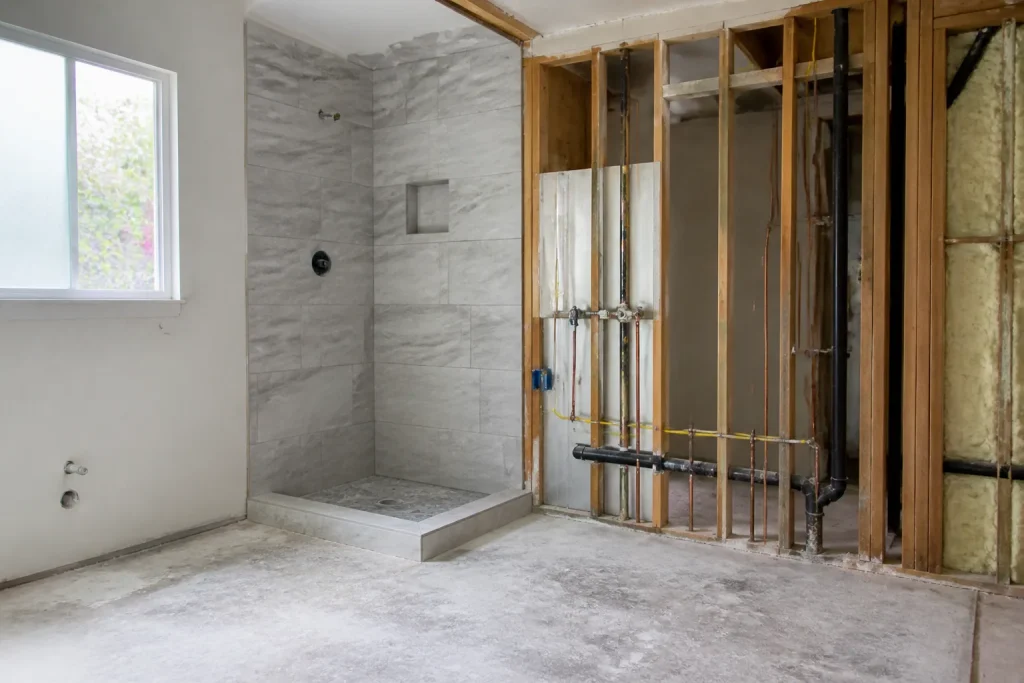
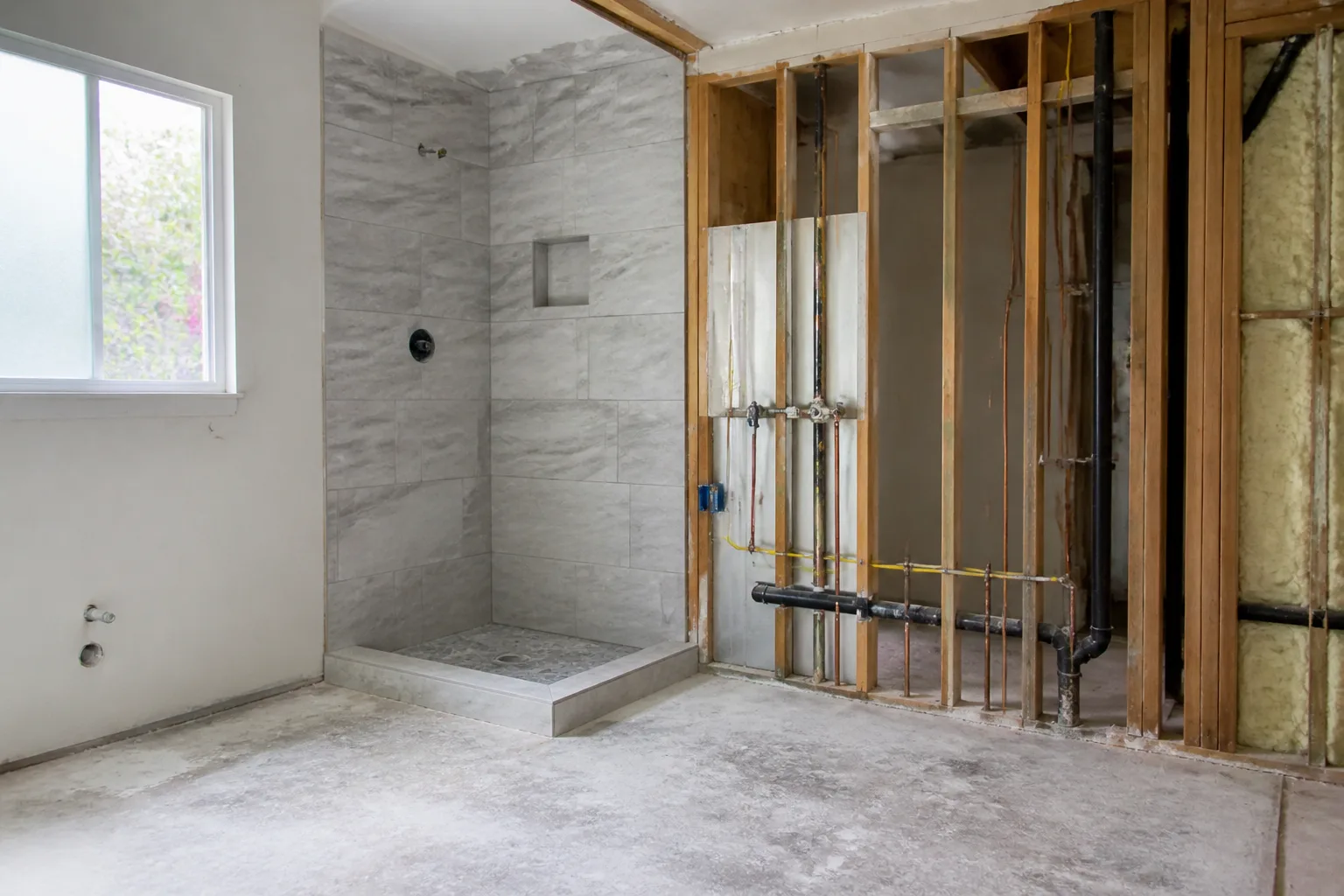
This one is a sequencing error, and it’s expensive. Rough-in means the plumbing and electrical lines are installed behind the wall but before the wall is closed. In Mission Viejo, the building department requires certain rough-in inspections before tile or drywall covers the work. If your contractor schedules tile before that inspection passes, you’re one failed inspection away from tearing out finished tile and starting over.
A real schedule looks like this:
- Demolition and discovery. Substrate exposed, discoveries documented and priced in writing.
- Rough-in. Plumbing, electrical, and any HVAC changes installed. Walls still open.
- Rough-in inspection passed. Signed off before anything closes the wall.
- Waterproofing. Membrane or liner installed and inspected if your jurisdiction requires it.
- Tile and finish. Floors, walls, fixtures, trim.
- Final inspection and walk-through. Documented scope checked line by line.
Ask to see the schedule on paper. Tile going up before a rough-in sticker is on the permit is the single most reliable warning sign that the crew is improvising.
Mistake #3: Approving a Fixture Allowance Without Understanding How Overages Get Billed

An allowance is a placeholder number in the contract for a product you haven’t picked yet. Say the contract lists a $400 allowance for the faucet. You fall for a Kohler or Moen model at $700. Here’s where the fine print matters: the way most contracts are drawn, you pay the full $300 difference at retail, sometimes plus a markup on top, and sometimes an administrative fee the contractor never mentioned.
Do the math before you sign:
- What’s covered? A $400 allowance means $400 of the faucet is built into your price. Everything above it comes out of your pocket.
- What’s the overage rate? Retail difference, retail plus markup, or a flat fee. Get the number in writing.
- What happens if you go under? If you pick a $250 fixture, does the $150 come off your bill, or does the contractor keep it? Know before you sign.
One clean solution: skip allowances entirely and pick your fixtures up front, before the contract is drawn. That’s part of why we work from a documented brand roster (Caesarstone, Kohler, Moen and others) with manufacturer specs you can actually price against. No allowance guessing, no invoice surprise.
Mistake #4: Skipping the Waterproofing Spec
Waterproofing is the part of a bathroom build nobody sees, so it’s the part that gets cut. Three common methods are used in Mission Viejo bathrooms, and they are not interchangeable:
- Schluter membrane. A bonded sheet membrane applied over cement board on walls and floor. It’s a common choice in wet areas and shower pans, and it works when the installer follows the manufacturer’s technical specifications exactly. Cut corners on the seams, and you’ve paid for a membrane that won’t hold.
- RedGard (or similar liquid-applied coating). Rolled or troweled onto the substrate in multiple coats to a specified thickness. Excellent when applied at the right mil thickness and the right cure time. Poor when a crew paints one coat on and moves to tile.
- 15-lb. felt liner behind cement board. The traditional method. It works, and it’s been used in Southern California for decades, but it relies on correct lapping at every seam and on proper weep holes at the drain.
The right spec depends on your shower configuration, substrate, and whether the drain is a traditional clamping drain or a bonded flange. What matters most: the spec is written into the contract, the manufacturer’s instructions are on site, and the installer can explain why that method was chosen. Ask for the waterproofing spec in writing. If the answer is “we always do it the same way,” that’s not a spec.
Mistake #5: No Written Payment Schedule Tied to Verified Milestones

This is the biggest financial risk in a bathroom remodel, and it’s the easiest to fix. A payment schedule based on time (“30% at start, 30% at week two, 40% at the end”) pays your contractor for showing up, not for finishing. A payment tied to verified completion pays for actual progress.
A disciplined schedule reads like this:
- Deposit at contract signing. Modest, covers mobilization and materials orders.
- Payment on demolition and rough-in complete, inspection passed. Verified by the inspection sign-off, not a calendar date.
- Payment on tile and waterproofing complete. Verified by your own walk-through.
- Payment on fixture install and finish complete. Verified by you signing off the documented scope.
- Final payment on final inspection and signed walk-through. The crew has cleaned the site, the punch list is closed, and you hold the written guarantee in hand.
Never pay the majority of the contract before the work is done, and never pay in cash without a receipt that lists the milestones. If a contractor demands a large upfront payment with no tie to completion, that’s the moment to walk.
When to Call a Pro
Some of these mistakes are recoverable if the homeowner catches them in the first week. Others aren’t. Waterproofing done wrong won’t show up for six months, and by then the tile, the drywall, and sometimes the subfloor are all in the repair bill. Rough-in that fails inspection means rework, and rework on a bathroom means re-tile. If your project is already open and you’re not sure the sequencing is right, it’s worth a second set of eyes. That’s the kind of question a call can answer in ten minutes.
We work in Mission Viejo bathrooms every week, and we’ve watched the pattern long enough to know that the finishes are the last thing to go wrong. The paperwork and the rough-in are where the money actually gets spent. If you’d like a written scope and price before anything gets signed, our team is glad to walk the room with you.
Related services in Mission Viejo: Bathroom Remodeling in Mission Viejo, and for projects that touch other rooms, our Kitchen Remodeling in Mission Viejo and General Contractor in Mission Viejo pages cover the wider scope.
The Bottom Line
The five mistakes that actually cost money on a Mission Viejo bathroom remodel are all about contracts and sequencing, not finish choices: no demolition discovery clause, tile laid before the rough-in inspection passes, allowances you don’t understand, waterproofing with no written spec, and a payment schedule that pays for time instead of completion. Get those five things in writing and your project has a fighting chance of finishing on budget. Every completed Bradford project is covered by the 365-Day Done Right Promise, which means if the work fails within that guarantee period, we come back and correct it at no charge.
If you’re in Mission Viejo and want help getting your scope, price, and schedule squared away before anything is signed, Bradford Remodeling Co Mission Viejo offers free estimates. Call (833) 734-2429.
Frequently Asked Questions
A full bathroom remodel in Mission Viejo typically runs $18,000 to $45,000 depending on size, whether plumbing moves, and finish level. A cosmetic refresh (new tile, fixtures, paint) often lands in the $10,000 to $18,000 range. Get a written price from your contractor before any work starts, and expect it to hold unless you approve a documented change order. Call (833) 734-2429 for an exact quote on your bathroom. Estimates are free.
Yes, you need one. A demolition discovery clause is the contract language that defines what happens when the tile comes off and there’s rot, unpermitted plumbing, or cracked framing behind it. It names the conditions, sets the pricing method, and requires your written approval before extra work starts. Without it, the answer to “who pays for this” is whatever the contractor decides. Call (833) 734-2429 and we’ll walk you through what a fair clause looks like.
No. Tile should never be installed before the plumbing and electrical rough-in inspection has passed, because a failed inspection means demolition and rework on already-finished surfaces. In Mission Viejo, the rough-in inspection is required before the walls close. Ask to see the inspection sign-off before your contractor orders tile. Call (833) 734-2429 if you’re unsure whether the sequencing on your project is correct.
Tie each payment to a verified completion milestone: demolition and rough-in passed, tile and waterproofing complete, fixtures and finish complete, and final inspection plus signed walk-through. Avoid time-based schedules that pay for weeks worked rather than work done. Never pay the majority of the contract before the job is finished. Call (833) 734-2429 for a review of your payment schedule, at no cost.
Written by the team at Bradford Remodeling Co Mission Viejo.
Need Construction Help?
Call Bradford Remodeling Co Mission Viejo - licensed & insured, here with fast after-hours help in Mission Viejo.
(833) 734-2429